






From Japan’s warm red bean soup to France’s Bûche de Noël, winter desserts around the world are warming, festive, and rooted in tradition. This guide covers five classics and adds three more to try.

8 Traditional Winter Desserts From Around the World, From Oshiruko to Bûche de Noël
Introduction
As the bite of winter slowly makes its presence known, most countries gear up for the winter by preparing unique desserts. These desserts are mostly for the festive season of Christmas and the coming New Year. From bowls of sweet soups in the Orient to boozy cakes in the Occident, the winter desserts are warm, spiced, and rich.
Winter Desserts at a Glance: Country, Occasion and Main Flavor

| Dessert | Country | When It Is Eaten | Key Ingredient |
|---|---|---|---|
| Oshiruko | Japan | Winter months | Azuki red beans |
| Bûche de Noël | France | Christmas | Sponge cake and buttercream |
| Tangyuan | China | Winter solstice and Chinese New Year celebrations | Glutinous rice |
| Plum Cake | England | Christmas | Dried fruits |
| Panpepato | Italy | Christmas | Nuts, spices, and candied fruit |
| Stollen | Germany | Christmas | Dried fruit and marzipan |
| Oliebollen | Netherlands | New Year | Fried dough |
| Risalamande | Denmark | Christmas | Rice pudding and almonds |
1. Oshiruko, Japan
A sweet red bean soupy dessert, Oshiruko is one of the simple but famed Japanese desserts made with azuki red beans boiled in sugar water with rice cakes floating in the bowl. It is served between meals and eaten hot to warm up the body during the cold winter months. The name of the Oshiruko differs too depending on whether the azuki beans added are whole or mashed. Different parts of Japan consume and prepare the beans for the soup differently. For example, in Western Japan the red beans are whole, and it goes by the name Zenzai. From supermarkets to vending machines, Oshiruko becomes a familiar sight as winter settles over Japan.
2. Bûche de Noël, France
Tied to French winter traditions, especially Christmas, Bûche de Noël goes by Yule Log in the UK, and is typically served after the Christmas feast. The cake uses a light sponge cake that is rolled to resemble a log and covered in chocolate and coffee buttercream. The buttercream is textured in a way to resemble a wooden log. This tradition goes back to the Pagan times when a huge piece of log would be burned in winter to keep the harsh winter cold away and mark the winter solstice, the coldest day of the year. It is still followed, and the actual wood Yule log has shrunk in size today and is not burnt completely. Today, the wooden log has largely given way to this festive cake, which remains one of the best-known traditional Christmas desserts around the world.
3. Tangyuan, China

A traditional Chinese New Year dessert, Tangyuan is made with glutinous rice balls usually served in the very soup it was cooked in. Typically, the Tangyuan comes with a filling of red bean, sesame, or peanut paste. It’s known as Tangyuan in the southern part of the country, whereas in the northern part, it’s called Yuanxiao, after the Lantern Festival. Both are eaten in peak winter, but the time differs. The North eats it on the last day of the Chinese New Year, while the South has it during the winter solstice celebrations.
4. Plum Cake, England
The plum cake started as a porridge in medieval England where prunes or plums were used. Slowly, the plums were swapped for other fruits that started being readily available. But the name stuck, even after baking and the art of making cakes was introduced to the world. As communities developed, exchanging Christmas cakes also began, and that still sticks to date. To become an influential thing, it needed to cross the Ocean and make it in America, and so it did. As Europeans moved to America, the Plum Cake debuted there too, and now any kind of fruit cake that falls under the ambit of plum cake is always gifted during the winter celebrations of Christmas.
5. Panpepato, Italy

Rooted in rural Italian traditions, Panpepato is a typical Italian Christmas fruitcake prepared for the Christmas festivities during winter. One of the most noteworthy Italian desserts today, Panpepato perhaps originated in the 1700s, and there’s an interesting tale connected with this dry spiked fruit and nut cake. The tale goes that caravans selling spices, perhaps the Oriental traders or the gypsies brought this cake with them, introducing it to the central area of Italy. It is traditionally prepared on 8th December, and as Italy is known for its vineyards, the cake ingredients were substituted with cooked grapes, walnuts, and citrus fruits. The cake is today prepared with almonds, hazelnuts, and candied fruit from different parts of the country, using the best of the local produce.
6. Stollen, Germany
Stollen is a traditional German Christmas bread made with dried fruits and often marzipan. It is usually covered with powdered sugar and enjoyed during the festive season. Its rich texture and sweet ingredients make it a popular holiday treat and one of the traditional winter desserts enjoyed across Germany.
7. Oliebollen, Netherlands
Oliebollen are Dutch fried dough balls traditionally eaten around New Year's Eve. Made from dough that may include raisins or currants, they are deep-fried until golden and finished with a generous dusting of powdered sugar. These simple, festive treats are a popular part of Dutch winter celebrations.
8. Risalamande, Denmark
Risalamande is a traditional Danish Christmas dessert made with rice pudding, whipped cream, and chopped almonds, usually served with cherry sauce. A whole almond is hidden in the pudding, and the person who finds it traditionally receives a small gift. It is a much-loved part of Christmas celebrations in Denmark.
Winter Desserts Closer to Home
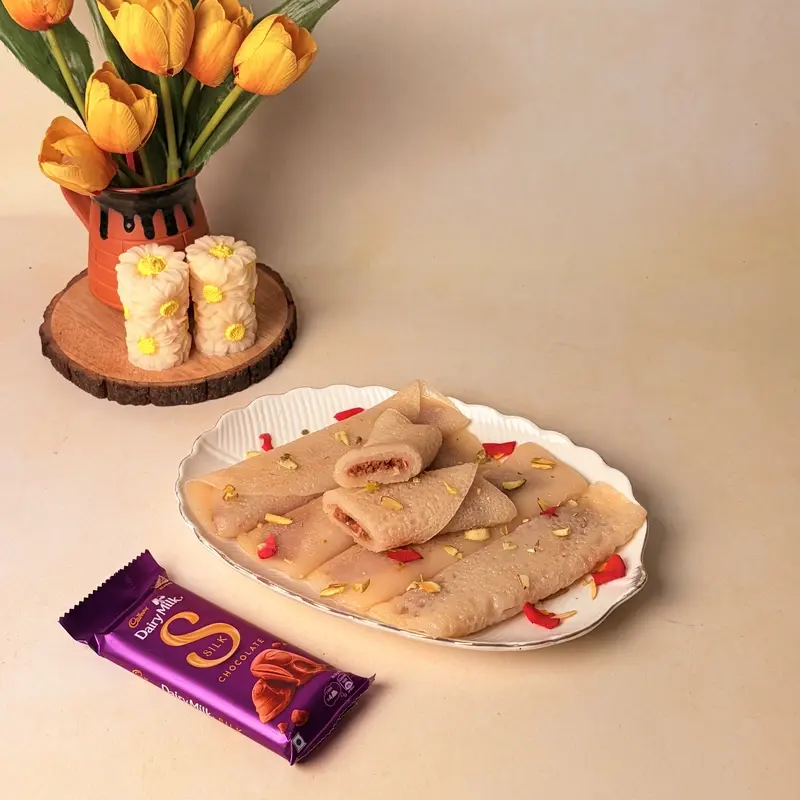
India also has plenty of traditional winter desserts, from warm gajar ka halwa made with carrots to jaggery sweets and crunchy gajak prepared with sesame seeds and jaggery. These treats are closely tied to seasonal ingredients and winter celebrations. If you want to add a chocolatey finish to these desserts, you can serve them with Cadbury Dairy Milk or enjoy a piece alongside your favorite winter sweet.
Frequently Asked Questions
1. What are traditional winter desserts around the world? 
Popular examples include Japan's Oshiruko, France's Bûche de Noël, China's Tangyuan, England's plum cake, and Italy's Panpepato.
2. Which dessert is eaten at Christmas in France?
Bûche de Noël, or Yule log cake, is a traditional French Christmas dessert made with rolled sponge cake and buttercream.
3. What is the difference between Oshiruko and Zenzai?
Both are sweet red bean desserts. The names and preparation vary by region in Japan, with Zenzai often referring to versions made with whole beans in western Japan.
4. Why do countries eat fruitcake on Christmas?
Fruitcakes became part of Christmas traditions through regional baking customs, the use of dried and preserved fruits, and the practice of sharing festive cakes with family and friends.
5. Which winter desserts are easy to make at home?
Oliebollen, plum cake, and rice pudding are options to try at home. Their ingredients and methods can be adjusted to suit personal preferences.
Like This Article?
More Like This


Popular Articles