






Bastani and faloodeh are popular frozen desserts that originated in Persia during the Classical Age.
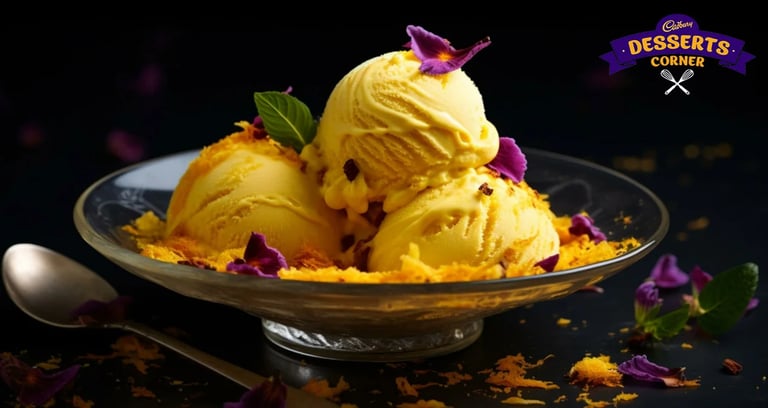
The Old Persian Empire, originally known as the Achaemenid Empire, was one of the most dominant dynasties of the world from the 6th century BC to the 4th century BC. During this time, the Persians governed numerous states presently situated in the Middle East and Central Asia, including countries such as Afghanistan, Turkey, Syria, Lebanon, Egypt, and Uzbekistan. In addition to its military might, the Old Persian Empire was also famed for its spectacular architecture, intricate weaving and artwork, and expansive metalwork. In fact, many of the most iconic and renowned pre-Islamic mosques and shrines were constructed during this era. These structures can still be found in modern-day Persia, a country we currently know by the name of Iran.
The impact and influence of the Old Persian Empire on modern art and architecture is indelible and undeniable. But did you know that this dynasty also had a rich and thriving food culture? Historical records suggest that fancy feasts and banquets were common occurrences among the ancient Persian nobility, and food was often seen as a means of cultural exchange. In this way, food, and especially sweet dishes, held great power in ancient Persia as these dishes were symbolic of abundance, authority, and most importantly, self-expression. Among the most celebrated sweet dishes of ancient Persia that laid the basis for modern dishes were “Shirini Nargili,” that is, coconut macarons, and “poolaki,” which is a deliciously decadent form of caramelized hard candy.
Remarkably, the ancient Persians were able to invent timeless and mouthwatering desserts even before they had access to sugar. According to food historians, sugar was only introduced in the Middle East in the 1st century. Before this, the ancient Persians used honey as their main sweet condiment alongside fruits and dates. Ingredients, such as rosewater, saffron, pistachios, and flower blossoms, were also commonly used in ancient Persian delicacies. Therefore, it isn’t surprising that both saffron and pistachios form a vital part of one of the most legendary Persian culinary delights called bastani. Let’s travel back to ancient Persia to learn all about bastani and one of its equally cherished accompaniments, faloodeh.
Persian/Iranian locals refer to bastani using multiple names, such as “bastani sonnati” and “bastani sonnati zaferani,” which translate to “traditional ice cream” and “traditional saffron ice cream,” respectively. Being one of the hallmarks of ancient Persia, this ice cream is renowned the world over. Internationally, the frozen delicacy is usually called Persian ice cream. The main ingredients that go into the preparation of bastani are rose water, saffron, vanilla, pistachio, whole milk, heavy cream, egg yolks, sugar, and salep, which is a specialized flour that is also used in Turkish ice cream. Before the ancient Persians were introduced to sugar, vanilla, eggs, and other essential elements, they prepared and consumed a somewhat primitive version of bastani, which was brimming with the fresh and luscious flavors of rosewater and orange. Hence, the name traditional saffron ice cream is quite apt.
In terms of taste and texture, bastani is described as scrumptious and creamy with a strong hint of saffron. The vanilla, of course, adds a layer of sweetness to the dish and wonderfully counteracts the spice of the saffron. Similarly, the pistachios provide crunch to the ice cream. Despite being perfect the way it is, many modern bakers and confectioners like adding a hint of chocolate to modernize the traditional ice cream. Cadbury Silk chocolate shavings can be used to garnish the ice cream. Similarly, Oreo cookies, Cadbury chocolate bits, and Toblerone chocolate bits can be incorporated into the ice cream as well to elevate the flavor of the pistachios and the saffron. Although bastani is a traditional dish, don’t be afraid to contemporize and customize this ice cream to the present time.
Another enduring legacy of the ancient Persian food scene is faloodeh. This iced dish is not to be confused with the drink “falooda,” believed to be Mughal concoction, that is widely consumed in India and other parts of South Asia. Bastani and faloodeh are two dishes that are inextricably linked; not only do they serve as the culinary mainstays of Persian sweet dishes, but sometimes, faloodeh is consumed along with bastani. So, what exactly is faloodeh? Essentially, faloodeh is an iced sorbet made with vermicelli noodles, and as mentioned already, it is frequently mixed with bastani or Persian ice cream, as it is called across the globe. Dating back to the 4th century BC, faloodeh holds the distinction of being one of the oldest desserts in the world.
Faloodeh basically evolved from an early iteration of the snow cone that the Persians innovated when they collected snow and poured grape juice over it. Eventually, faloodeh was invented by cooking and freezing the thin and stringy vermicelli noodles in a blend of sugar and rosewater. A pinch of lime was also added to the finished dish to give a layer of freshness and acidity to the icy concoction. Imbued with a sweet and sour taste, faloodeh is popularly believed to be one of the most beloved desserts of ancient Persia and is still savored all over Iran today, especially during the humid summer months. Interestingly, one of the most impressive Persian inventions is tied to faloodeh. “Yakhchals” were mammoth ice houses shaped like domes that were equipped with characteristics, such as mud walls and aqueducts, which helped keep icy treats like faloodeh cool during the sweltering summer season.
Over the centuries, there have been several iterations of faloodeh. The most common modern versions of the frozen treat use food items, such as mint and berries, to enrich the ice cream. Sour cherries, or rather, cherry syrup, are another popular condiment used to embellish faloodeh these days, as well as pistachios and other nuts. We recommend that you enjoy and savor the delicacy alongside a scoop of the inimitable Persian ice cream (bastani) to get the maximum flavors out of both these esteemed sweet dishes that took root during the days of the formidable Old Persian Empire.
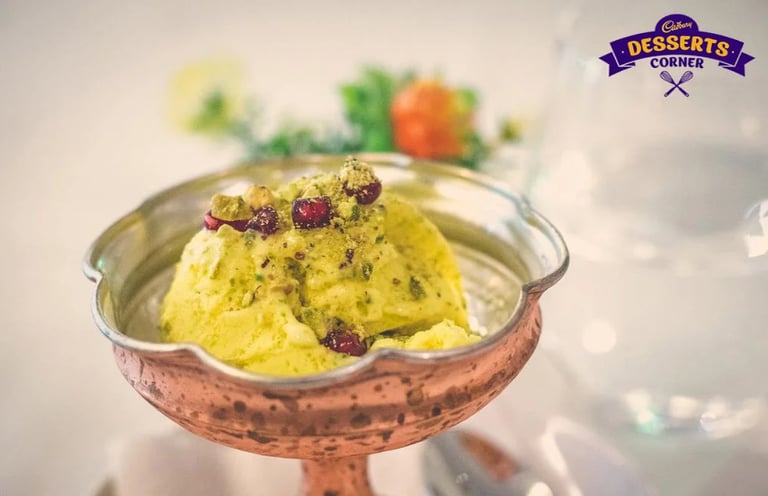
What Is Bastani
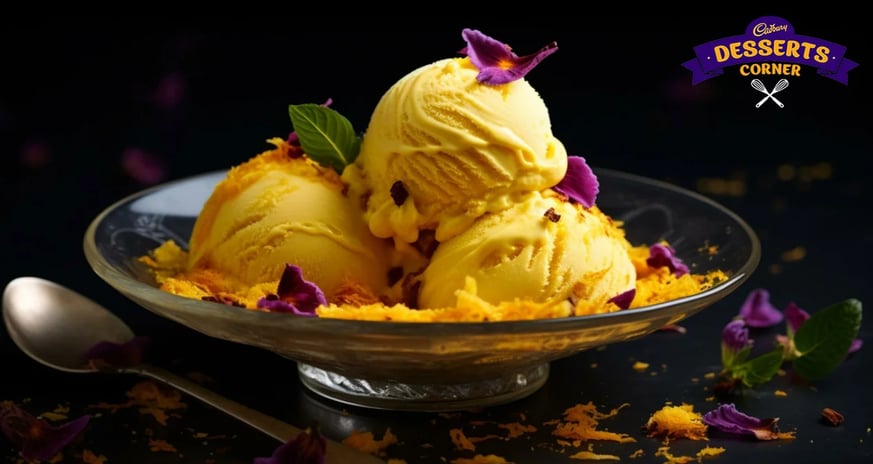
Bastani ice cream is an ancient Iranian culinary delight that is believed to have been created around 500BCE. Popularly known as Persian ice cream or ‘Bastani Sonnati’, this chilled dessert is loved for its delicious flavor, the distinct yellow color, and the signature elastic texture. Made with rich ingredients like milk, heavy cream, sugar, rose water, vanilla, egg yolks, pistachios, and saffron, this dessert is one of the oldest chilled desserts across the world.
What is Faloodeh (Paloodeh)
Faloodeh is another traditional Iranian cold dessert. Owing to its chilled and semi-frozen texture, it is often compared to a granita or a sorbet. This classic Persian dessert features some starch noodles dipped in semi-frozen, sweet rose water syrup. To pair with its cool and refreshing vibe, it is often served with some lime juice and ground pistachios.
What Are The Origins Of Bastani And Faloodeh?
Both Bastani and Faloodeh have their origins rooted in Iran or ancient-day Persia. With their origins dating back around 500BCE, both the desserts are believed to be the oldest frozen desserts made using early refrigeration technology known as ‘yakhchals’ or ice pits.
Frequently Asked Questions
What does bastani taste like? 
Made with rich and delicious ingredients like milk, heavy cream, sugar, rose water, vanilla, egg yolks, pistachios, and saffron, Bastani carries an intensely rich, sweet, and aromatic taste set by rosewater and notes of saffron.
What does faloodeh taste like?
This simple, non-dairy, chilled dessert features a light texture and a tangy profile. It often tastes like a semi-frozen lime slushie that is paired with chewy starch noodles.
How did the ancient Persians make frozen desserts without refrigeration?
The intriguing history of the making of frozen desserts in ancient Persia involves a concept called ‘yakhchāls’. These dome-shaped, insulated underground ice pits were made from a heat-resistant mortar of sand, clay, egg whites, and goat hair. Persians used mountain ice and stored it in the ice pits to make the frozen desserts. To maintain the below-freezing temperatures amidst the scorching desert heat, they also utilized techniques like wind catchers and evaporative cooling.
What toppings go on bastani?
Bastanis are often served with traditional toppings and garnishes like chopped pistachios, dried rose petals, and saffron to add some crunch and texture that go perfectly with the dessert’s overall flavor profile.
Why is saffron so important in Persian desserts?
Being the most expensive spice in the world, the abundance of saffron in Persian desserts often symbolizes wealth and hospitality. Besides symbolism, it is often used for its vibrant golden color and a subtle floral aroma as well.
What toppings are used on faloodeh?
Faloodeh is commonly served with fresh lime, lemon juice, or sour cherry syrup. All of these are added to complement the tangy flavor profile of faloodeh.
Like This Article?
More Like This



Popular Articles


Trending Web Stories


Curated Recipes