












From kheer to barfi, India has a variety of sweets. While some are regional hits, here’s a list of the most popular Indian desserts that never go out of style.
India has a rich and varied cuisine, and this is reflected splendidly in its desserts. Every region and state has its own unique desserts. But there are a few Indian desserts that are favourites all over the country, enjoyed by people everywhere. Essentially, they are classics that are never going out of style. They've been captivating taste buds for generations, and we can be sure that they will continue to do so. So here are a few classic Indian dessert recipes for parties to try your hand at.
Know About The Most Popular Indian Sweets
Kheer
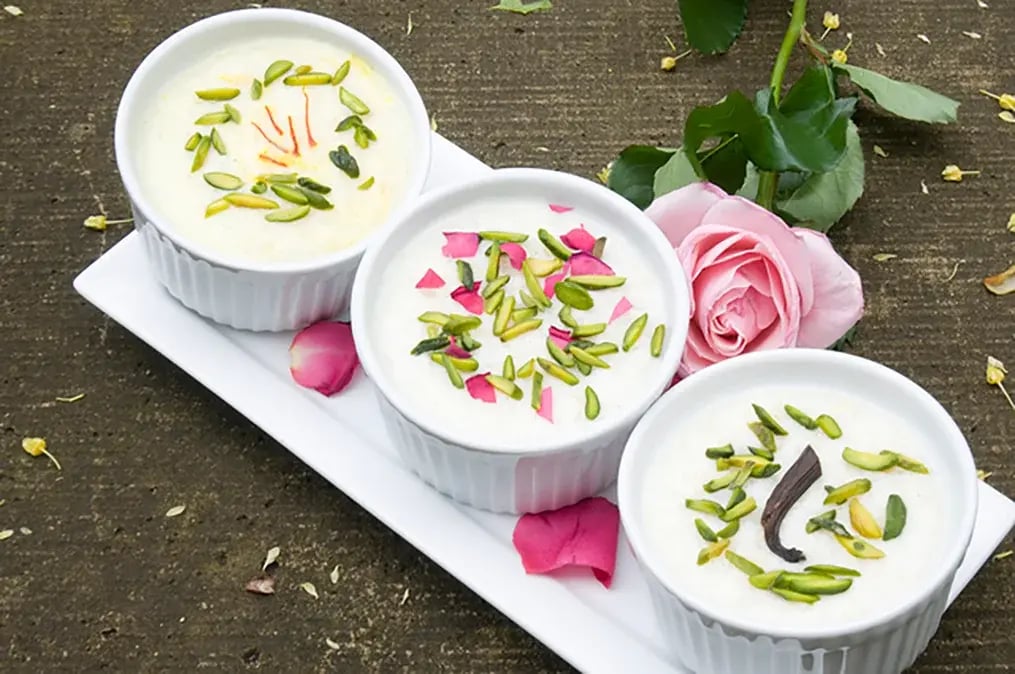
Kheer is a quintessential rich and creamy Indian dessert typically made from rice, thickened milk, and spices with the unadulterated goodness of nuts like almonds, cashews, and pistachios. Many prefer this dessert owing to the inherent sense of comfort that comes with the rich, creamy, and nutty texture. To make it visually attractive, it can be garnished with crushed dry fruits. This creamy dessert is a staple at festivals, celebrations, and special occasions, and known for its comforting aromas and indulgent flavors.
Ingredients:
- ¼ cup basmati rice
- 1 liter of whole milk
- 6 tablespoons sugar
- ½ teaspoon green cardamom powder or 5 to 6 green cardamoms powdered in a mortar-pestle
- 1 pinch saffron strands or 14 to 16 saffron strands
- 1 tablespoon chopped or sliced almonds or blanched almonds
- 1 tablespoon chopped or sliced cashews
- 1 tablespoon chopped or sliced unsalted pistachios
- 1 tablespoon golden raisins
Directions:
- Rinse rice a couple of times till the water runs clear of the starch. Then soak the rice in enough water for 15 to 20 mins.
- Meanwhile, take whole or full-fat milk in a pan or kadai and let it come to a boil.
- Take 1 tablespoon of milk from the pan in a small bowl. Then add a few saffron strands. Keep aside.
- After the milk begins to boil, drain all the water from the rice and add the rice to the hot boiling milk. Mix very well.
- Simmer and cook rice on a low heat. No need to cover the pan when the rice is cooking. Cook the rice grains till they are 50% done or half-cooked.
- Then add sugar. Continue to cook rice on a low to medium-low heat. Do stir at intervals. Simmer till the rice is almost cooked.
- Then add ½ teaspoon green cardamom powder. Add blanched and peeled sliced almonds, chopped cashews, and sliced pistachios. Mix well. Then add the saffron-infused milk.
- Again, mix and continue to cook on a low flame till the rice kheer thickens and the rice grains are completely cooked. Switch off the heat when the rice grains are completely cooked. The kheer will also thicken.
- Enjoy cold or warm.
Gulab Jamun
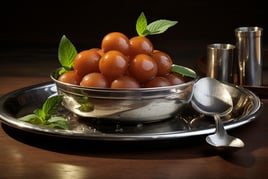
Gulab Jamun, hands down, rules the world of desserts across the globe. Popular for its indulgent, melt-in-the-mouth texture, this sweet is a celebration staple across the nation. While it is believed to have evolved from Persian delicacies, over the decades, Gulab Jamun has become an integral part of Indian culinary heritage.
With its slightly crispy, golden brown exterior and the soft and syrupy interior, this dessert rules the hearts of dessert aficionados. When making, combine flour, paneer, sooji, condensed milk, baking powder, and baking soda to form the soft dough. Shape them into balls, fry them, and soak them in sugar syrup to enjoy this quintessential Indian delicacy with your loved ones.
Chef’s Tip: Avoid overkneading the Glab Jamun dough. It often causes gluten formation and leads to tough Gulab Jamuns instead of the soft, syrupy ones.
Gajar Ka Halwa
Gajar ka Halwa, often referred to as Indian Carrot Pudding, is a beloved traditional Indian dessert. Known as a winter delicacy, this slow-cooked, sweet, creamy dish is particularly popular in Punjab and North India. This quintessential winter dish is made with grated red carrots with milk, ghee (clarified butter), sugar, khoya, and aromatics like cardamom. The slow cooking with khoya often creates the signature, thick, creamy texture that melts really quickly in the mouth. It is often garnished with nuts such as cashews, almonds, and pistachios. Despite its origin in North India, over the decades, this dessert has turned into a hallmark dessert for all kinds of celebrations across states.
Chef’s Tip: For best results, use juicy, tender carrots that are known for their natural sweetness and vibrant colour. It is important to sauté the carrots well in ghee for 10 to 15 minutes before adding milk. This removes the raw smell of carrots.
Kaju Katli
Some Indian desserts, despite being utterly simple, always stay in people’s hearts. These diamond-shaped, cashew-rich, sweet delicacies are one of them. Kaju Katlis are not only a sweet treat, but they are also a sweet, nostalgic part of the childhood of almost every Indian. Besides, festive celebrations are never complete without them. They bring in that inherent flavor of festivities. Be it Holi, Dussehra, or Diwali, these sweets make celebrations even more joyful with every bite.
Kaju Katlis are known for their luxurious, melt-in-the-mouth texture and rich, nutty flavor. Made with simple, high-quality ingredients (cashews, sugar, ghee, condensed milk), these iconic diamond-shaped treats are often adorned with edible silver leaf. This lends a premium, visually elegant look to the sweets as well.
Chef’s Tip: For the best results, it is always better to pulse the cashews in short bursts. Vigorous grinding is not recommended as it causes them to release oil, which leads to a sticky, oily paste.
Barfi
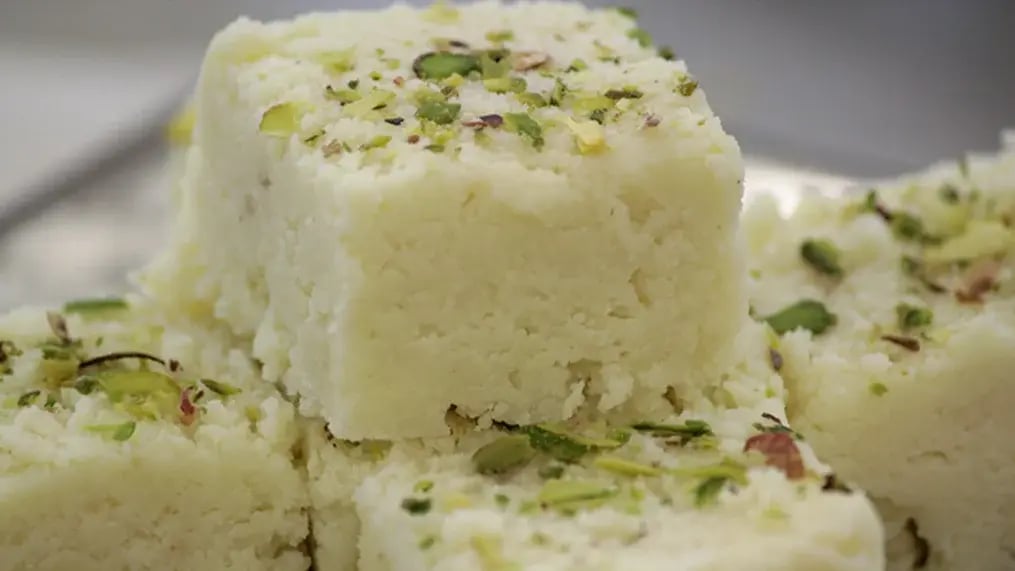
Another Indian favourite is the versatile barfi, a dense and fudge-like sweet which can be enjoyed at any time. It is a popular, milk-based sweet known for its rich taste and a quintessential melt-in-the-mouth texture. The recipe includes pure, traditional ingredients like khoya, ghee, nuts, spices, sugar, and milk. Be its a festive season or just a random weekday, this versatile sweet can make one feel better anytime. Here’s the recipe for barfi to try at home.
Ingredients:
- 250 gm Khoya
- 5 tablespoons sugar, or add as required
- 3 to 4 green cardamoms, powdered
- 15 pistachios, finely chopped
- 15 almonds or cashews, finely chopped
- 15 strands of saffron
- 1 to 1.5 teaspoons milk
- ⅓ teaspoon ghee, for greasing
Directions:
- First, grate or finely crumble the unsweetened khoya or mawa.
- In a small bowl, dissolve the saffron strands in milk.
- Grease a bit of ghee on a butter paper or parchment lined on a tray or small baking pan.
- Add the grated khoya to a thick-bottomed pan. Begin to cook on low heat for 2 to 3 minutes, stirring often.
- Switch off the heat and add sugar. Stir to mix. Then turn on the stovetop heat. The whole mixture's consistency will become smooth and slightly thinner, due to the sugar melting. Stir often and continue to cook on a low heat.
- When the mixture becomes slightly thick and starts leaving the sides of the pan, it's time for the next step. Add chopped almonds, pistachios, or your choice of nuts.
- Also, add green cardamom powder. Stir to mix and turn off the heat. Avoid cooking too much, as then the barfi will have a chewy texture.
- Pour the entire barfi mixture into the greased pan or butter paper. Spread evenly, keeping 1 inch thickness at the edges.
- Sprinkle the saffron-scented milk on the burfi.
- Once the burfi cools, slice into squares or a diamond shape.
- Serve immediately. You can also store them in an airtight box.
Chef’s Tip: To achieve the perfect results, always use full-fat milk, as it ensures a creamy and sweet consistency. Keeping the flame low is very important, as it prevents burning.
Delicious Milk-Based Indian Desserts
Shahi tukda
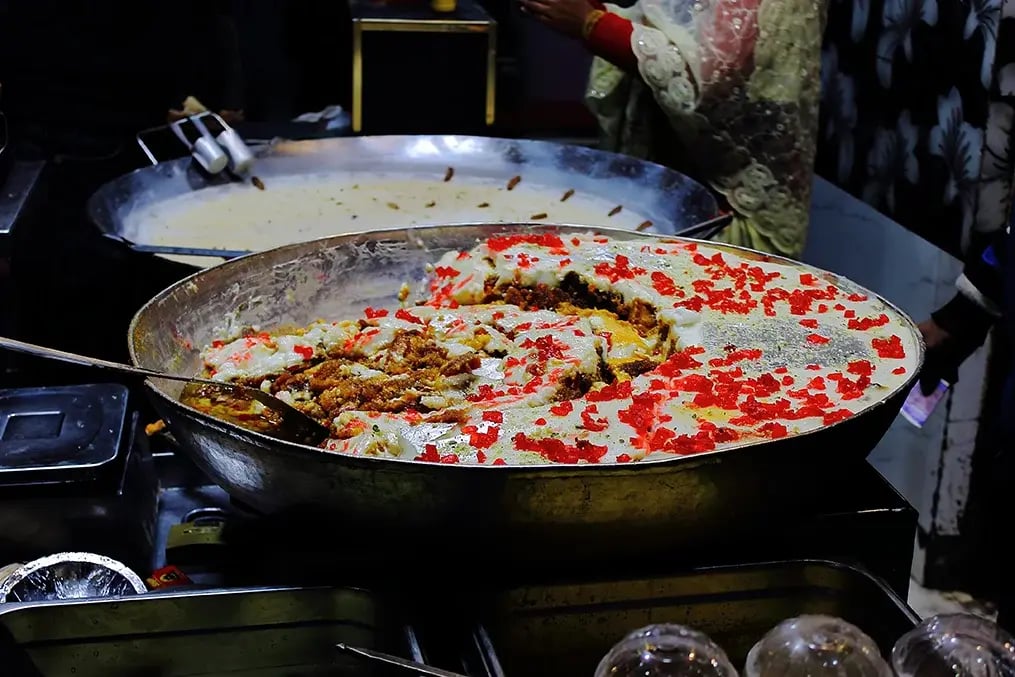
This is another classic Indian dessert recipe that depicts the grandeur of the Mughlai cuisine, with flavours that will last in the mouth for a long time. This sweet, creamy bread pudding has been ruling the hearts of dessert lovers for ages. Often translated to English as ‘royal piece’, this Mughal dessert is all about bread slices soaked in flavored sugar syrup and topped with rabdi. Here’s a recipe for the regal sweet dish.
Ingredients:
- 4 Bread slices
- ½ liter Milk
- ⅓ cup Sugar
- Ghee/oil for deep frying
- 2 tablespoons Pistachios, Chopped
- 1 teaspoon Corn flour
- 6 strands Saffron
- 3 drops Rose essence
Directions:
- Boil milk and add saffron soaked in 3 tablespoons of warm milk, and the corn flour mixed in 2 tablespoons of milk to it, and simmer the milk until it reduces to a thick but pourable consistency. This is called Rabri. Add rose essence last. If you want, you can add the chopped nuts at this stage.
- Remove the brown sides of the bread and cut diagonally. Fry the bread pieces till golden brown and crisp evenly. Use a shallow and small pan so that you do not need to use more ghee/oil.
- Deep frying in low or medium-low flame is necessary to get a crisp and golden brown color.
- Prepare a thick sugar syrup by boiling the sugar with a little water just to immerse the sugar. Soak the bread pieces as you fry them, just for a minute or until you take the next batch. Arrange the soaked pieces on a plate.
- Fry the chopped nuts in ghee and add them to the bread pieces. Pour the rabri over the arranged bread. Serve chilled or warm.
- Chef’s Tip: For crispiness, one may use 1-2 day-old bread slices, as they are drier and therefore absorb less ghee. This often leads to a crisper texture.
Rasmalai
Classic Rasmalai is an exquisite Bengali dessert that has carved its own niche across the nation’s culinary landscape. From Diwali to Holi, in every festival, Rasmalai enjoys a separate fanbase. Made from mouth-melting paneer dumplings, Rasmalai (also called ‘Rosh Malai’ in Bengali), is all about a delicious blending of flavors and textures with a hint of sweetness and saffron infusion.
In Bengali, ‘rosh’ means juice, and ‘malai’ refers to cream. This delectable Bengali delicacy is made by curdling the milk to prepare succulent paneer for the super-soft rasgullas and later dipping them in saffron-infused milk when the Rasgullas absorb the aromatic and spicy flavors to make authentic Rasmalai. While Saffron plays the role of the key flavor enhancer, the subtle tanginess comes from the soft paneer balls.
Chef’s Tip: Avoid curdling the milk while it is boiling. Let it cool for 5 minutes before adding lemon juice or vinegar. While squeezing the paneer dumplings, do not make them completely dry to avoid toughness.
Rabri
Be it a festive season or just a family gathering, the creamy, velvety Rabdi is an integral part of the Indian sweets. Rabdi’s delightful texture and luscious creaminess enhance the ecstatic feeling with every single serving. Rabdi can be easily prepared at home with milk, condensed milk, and mashed paneer. You can add a pinch of saffron strands soaked in warm milk and a pinch of ground cardamom for aroma.
Chef’s Tip: Using buffalo milk is best for this item, as the higher fat content creates thicker cream layers. Don’t keep stirring when the malai forms on top of the milk. Instead, collect it and use it with the reduced milk later to create texture.
Kalakand
This is another popular, traditional Indian sweet with a separate fanbase for its soft, grainy texture and rich, milky flavor. Made with paneer, milk, sugar, aromatic spices, and nuts, this sweet has a fudgy, creamy, moist, and slightly crumbly consistency. It is often garnished with nuts like pistachios and, sometimes, edible silver leaf (vark). This is often considered a staple during festivals like Diwali, Holi, and Navratri.
Chef’s Tip: To achieve the desired consistency, use fresh, homemade paneer. Avoid overcooking the mixture and remove it from the heat when it is thick and moist.
Regional Specialties You Must Try
Mysore Pak
With its origin in the 19th-century Mysore Palace, Mysore Pak is a rich, iconic South Indian sweet. It is known for a unique buttery texture that melts in the mouth instantly. Made from ghee, sugar, and besan (gram flour), it also features a porous texture paired with a soft and fudge-like consistency.
Chef’s Tip: While making this, mix ghee with a small amount of refined oil. It helps maintain a soft texture and prevents the sweets from becoming hard.
Rasogolla
These popular, snowball-like, white, syrupy sweets are all about a soft, spongy delicacy with every single bite. Made from ball-shaped dumplings of chhena and semolina dough, rasogolla or rasgulla are cooked in light sugar syrup. With its origin in Bengal and Odisha, this is a staple sweet item for almost every household.
Chef’s Tip: It is best to hang the chhena for an hour to remove excess whey. It should neither be very wet nor completely dry.
Ghevar
Ghevar is that traditional, disc-shaped, exquisite Rajasthani dessert made from the goodness of ingredients like flour, ghee, and milk. Known for its crispy, honeycomb-like texture, it is frequently prepared in Rajasthani households. Be it the festivals like Teej, Raksha Bandhan, and Janmashtami, or a wedding, i this deep-fried, sugar-soaked sweet is a must.
Chef’s Tip: Make sure the batter is very thin and lump-free. For the best results, mix ghee with ice cubes to turn it into a butter-like texture
Quick & Easy Indian Desserts for Beginners
Coconut Ladoo
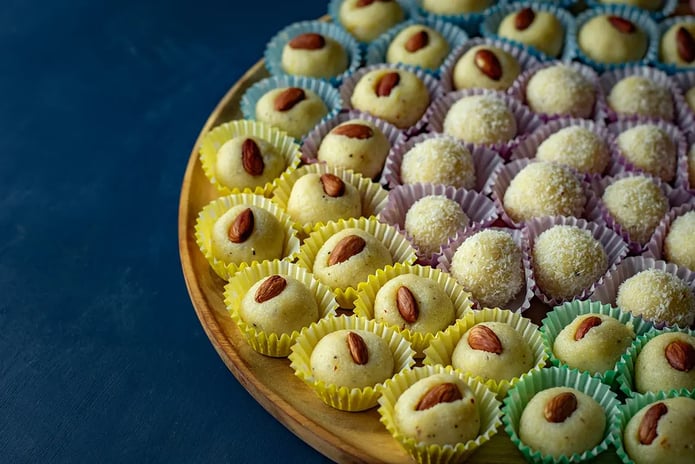
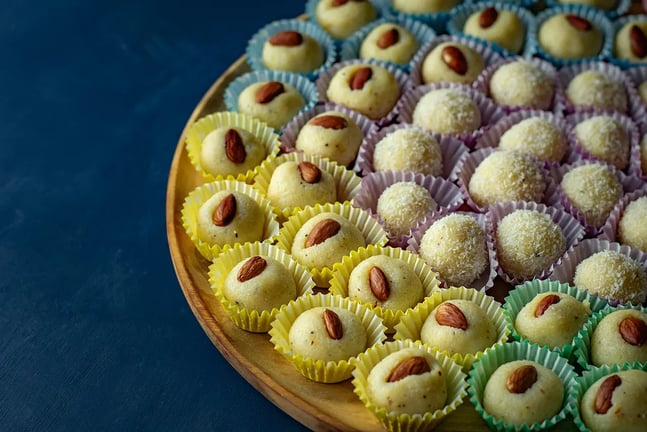
Coconut laddoo is one of the most favorite homemade Indian sweets. This is one of the most popular varieties of laddoos in the map of Indian sweets. Be it a puja at home or just a family gathering, one can always consider making these coconutty delights easily. This quick yet delightful festive dessert needs just 3 ingredients from your pantry staples- grated coconut, condensed milk, and milk powder.
Chef’s tip: Make sure the coconut is always finely desiccated. If using desiccated coconut that is old, always soak it in a little milk for 10-15 minutes to keep it moist.
Sooji Halwa
Sooji halwa is one of the most popular Indian comfort desserts. This dish includes semolina for traditional flavors with a chocolatey makeover. Basically, a semolina (sooji) halwa resembles pudding in texture and is prepared using semolina (sooji), clarified butter (ghee), sugar, water, and chocolate. The rest of the ingredients, such as cardamom, saffron, nuts, etc, are optional. For garnishing, you can use the nuts of your choice to provide a delightful crunch.
Chef’s Tip: To make sure the halwa tastes perfect, follow the classic rule of using equal parts sooji, ghee, and sugar.
Like This Article?
More Like This




Popular Articles


Trending Web Stories


Curated Recipes


