



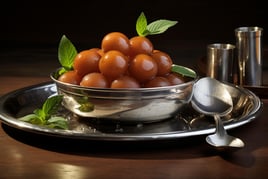


Mysore Pak is a sublime sweet with a melt-in-your-mouth flavor. If you love ghee sugar, this South special sweet will melt your heart and blow your mind.

Mysore Pak is a South Indian sweet originating from the Mysore Palace kitchens, made from besan, ghee, oil, and sugar, cooked in one-string syrup until porous, then set in a greased tray and cut.
What Is Mysore Pak?

Mysore Pak sweet is a traditional Indian sweet made of gram flour, ghee, and sugar. It has a rich flavor and a melt-in-the-mouth consistency. Depending on the preparation, it can be either light and airy or dense and slightly crumbly.
The texture of Mysore Pak can vary significantly depending on the amounts and types of fat used. Homemade versions often use a mixture of ghee and oil to achieve a light and porous texture, while commercial varieties sometimes replace some of the ghee with vanaspati for cost reasons.
Mastering the traditional version requires carefully controlling the sugar syrup consistency and thoroughly cooking the besan in the hot syrup. But before we divulge the recipe, let’s take a look at this delicious sweet’s history.
The History of Mysore Pak
In the kitchens of the Mysore Palace in the year 1935, Head Chef Kakasura Madappa tried several times to come up with a unique dessert for the royal family. Kakasura added gram flour, ghee, plus sugar and mixed it to make a delicacy.
The head chef was pleased with his wor,k and he ended up serving it to the Mysore Maharaja who fell in love with its simple flavors. The ruler wanted to know who had made it, and so Kakasura stated that it was his creation and called it ‘Mysuru Paka’. It was from these few words that the history of mysore pak began as a staple sweet of South India was born.
Mysore Pak Recipe (Ghee and Oil Version)

(Makes 12 pieces)
Prep time: 10 minutes
Cook time: 30 minutes
Ingredients:
- 250 gm besan or gram flour
- 350 gm sugar
- 125 ml water
- 250 gm ghee
- 125 ml oil (peanut oil)
Preparation:
- Grease a small tray with 1 tbsp ghee and keep it ready for setting the Mysore Pak.
- Sift the besan twice in a large bowl to remove the lumps, and divide it into 3 parts.
- Heat the ghee and peanut oil together in a Kadai over low to medium heat.
- In a separate wide and deep pan, add the sugar and water and cook continuously, stirring occasionally, until it reaches one-string consistency.
- Add the first part of besan to the syrup and mix well to ensure there are no lumps, and mix the second and third parts thoroughly.
- Pour in one ladle of the hot ghee oil mixture, and keep stirring until it is well incorporated into the besan mixture.
- Continue to add in the hot ghee oil mixture one ladle of the hot ghee oil mixture at a time, stirring after every addition until it is incorporated into the besan mixture before adding the next ladle.
- For the final addition, add the rest hot ghee oil mixture while continuously stirring until the mixture thickens and starts to separate.
- Immediately transfer the mixture to the greased tray and spread it using a greased spoon to smooth the surface.
- Let it set for 10-15 minutes, and then invert it on a plate and cut it into 12 pieces. Let it cool completely and store in an airtight jar.
Note: The prep and cook times are estimates and should be confirmed during recipe testing.
Tips for Authentic Homemade Mysore Pak

- The ratio of besan, ghee, sugar and oil used is key to achieving the proper texture. Follow the precise measurements, to avoid different results.
- Oil is used to give the traditional light and porous texture that is typical of a Mysore Pak sweet. Reducing or removing the oil will produce a smoother texture rather than the signature porous texture.
- The unroasted besan is traditional but roasting it for about 10 mins is optional. Besan will get cooked in the hot sugar syrup that will kill its raw flavor
- Use a heavy-bottomed kadai, pressure pan, or steel pan for even heat distribution and easy control of the texture as it cooks. Avoid non-stick surfaces.
- Smaller batches are easier to stir well without burning. Large batches require strong stirring skills to prevent sticking and ensure even cooking. Work in increments if doubling or tripling the recipe.
- Do not overcook trying to achieve the very dark color you see in the store-bought Mysore Paks. A deep golden brown is sufficient and store-bought may appear darker because they are prepared in large batches.
Ghee vs Oil: How Fat Changes the Texture
Ghee gives Mysore Pak sweet its rich flavor, while oil helps create a lighter, porous texture. Some commercial versions also use vanaspati.
Storing Mysore Pak
Store Mysore Pak sweet in an airtight container in a cool, dry place at room temperature for up to 5 days. Make sure the pieces have cooled down to room temperature before placing them in the container.
Frequently Asked Questions
Where does Mysore pak come from? 
Mysore Pak was first made in the royal kitchens of Mysore, Karnataka. The history of Mysore pak is linked to royal chef Kakasura Madappa.
Why is my Mysore pak hard?
Mysore Pak sweet can sometimes become hard if the mixture is overcooked or the sugar syrup is too concentrated.
Should I roast besan for Mysore pak?
Traditionally, unroasted besan is used for Mysore Pak sweet, since it is cooked into the hot sugar syrup. Roasting is optional, but it may affect the flavour.
Can I make Mysore pak without oil?
Yes, but without oil, the texture will be different. Mysore Pak sweet made with ghee only tends to be less porous and have a smoother consistency than the traditional one.
Like This Article?
More Like This


Popular Articles


Trending Web Stories


Curated Recipes