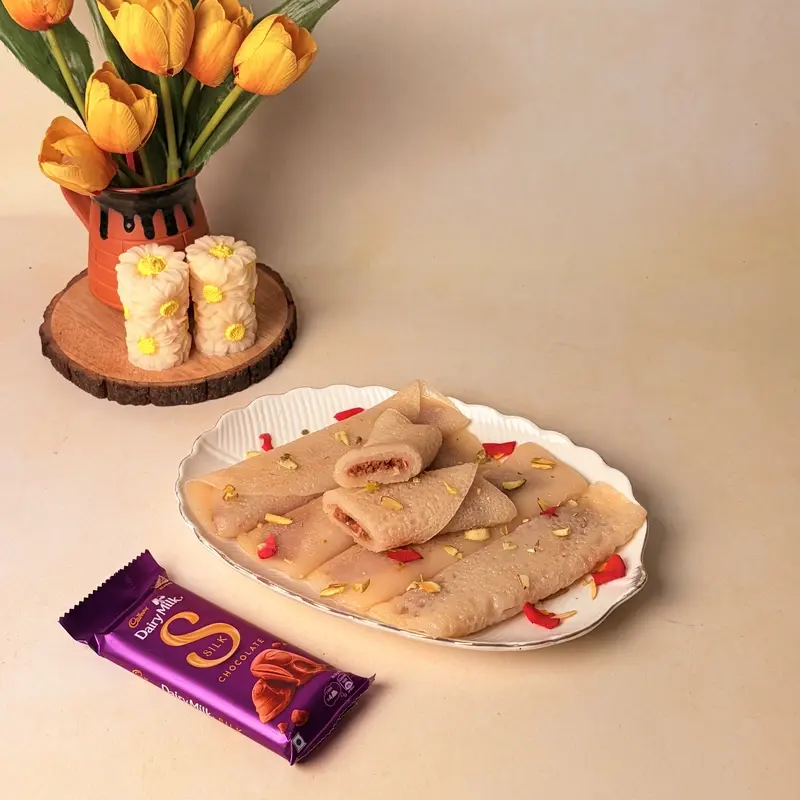











Celebrate Navratri with these delicious Navratri vrat recipes that cater to your fasting needs.

What Can You Eat During Navratri Vrat?
Celebrated with fervor, devotees worship the goddess's nine incarnations during Navratri through prayers and fasting, often eliminating non-vegetarian food, onion, and garlic from their meals.
Fasting food for Navratri includes traditional dishes like Sabudana khichdi, fruit chaat, and kheer, which are favored for their lightness and ease of digestion, utilizing ingredients such as kuttu atta, singhara atta, fresh vegetables, and rock salt.

Easy Navratri Vrat Recipes
Sabudana Khichdi
A popular dish during Navratri, Sabudana Khichdi is a delightful combination of sago pearls, peanuts, and spices. This dish is not only filling but also easy to make, making it a perfect option for fasting days.
Ingredients:
- Sabudana (sago pearls): 200 gm
- Peanuts (roasted and coarsely ground): 50 gm
- Potato (boiled and diced): 1 medium
- Green chilies (finely chopped): 1-2, as per taste
- Curry leaves: 8-10
- Ghee or oil: 2 tbsp
- Rock salt (sendha namak): to taste
- Lemon juice: 1 tbsp
- Coriander leaves (chopped): for garnish
Method:
- Rinse the sabudana under cold water, then soak it in water for about four to five hours until it is soft and fluffy. The sabudana should absorb the water without getting mushy. To test if the water is enough, take one soaked pearl on your finger and try mashing it. It should mash into powder easily without any hard core in the middle. Also, drain the excess water before cooking.
- In a pan, heat the ghee or oil over medium heat.
- Once the ghee is hot, add the curry leaves and chopped green chilies and sauté for a few seconds, until fragrant.
- Add the boiled and diced potatoes to the pan and cook until they start to turn golden.
- Drain any excess water from the soaked sabudana and add it to the pan, stirring gently to combine with the potatoes and spices. Do not mix or cook on a high flame, as it can make it sticky instead of a soft and fluffy texture.
- Add the coarsely ground peanuts and rock salt, mixing everything well to ensure the sabudana is evenly coated with the spices.
- Cook the khichdi for about five to seven minutes, stirring occasionally, until the sabudana becomes translucent. You need to cook it until they just start to get tender and translucent; don't overcook it because it will start to affect the texture.
- Remove from heat, add lemon juice, and garnish with chopped coriander leaves.
Fruit Chaat

Fruit Chaat is a refreshing and tangy salad made with a medley of seasonal fruits, tossed with a unique spice mix that elevates its flavor profile. This dish is perfect for snacking during Navratri, offering a burst of freshness and health.
Ingredients:
- Assorted seasonal fruits (like apples, bananas, oranges, pomegranates, and grapes): 2 cups, chopped
- Lemon juice: 1-2 tbsp
- Chaat masala: 1 tsp
- Black salt (kala namak): to taste
- Roasted cumin powder: 5-7 gm
- Chili powder (optional): a pinch
- Fresh mint leaves (chopped): for garnish
- Honey or sugar: to taste (optional)
Method:
- Wash and chop the assorted fruits into bite-sized pieces, keeping their skins on for added nutrition.
- In a small bowl, combine the chaat masala, black salt, roasted cumin powder, and chili powder. This unique spice mix is what makes the fruit chaat irresistible! For fasting-friendly preparation, ensure that the chaat masala and other spice mixtures used are allowed for the fast, or simply use sendha namak and roasted cumin powder for seasoning.
- In a large mixing bowl, add the chopped fruits and drizzle with lemon juice. Sprinkle the prepared spice mix over the fruits.
- Toss everything together gently to ensure the fruits are evenly coated with the spices and lemon juice.
- Taste the fruit chaat and adjust the sweetness with honey or sugar, if desired.
- Garnish with fresh mint leaves and serve immediately.
- Before indulging in fruit chaat, please remember that people with diabetes should practice portion control, as larger servings can lead to spikes in blood sugar due to the natural sugars present in fruits.
- Opting for low glycemic index fruits, such as berries and apples, can help mitigate this risk
- Additionally, it's wise to avoid added sweeteners like honey or sugar and to monitor blood sugar levels to gauge individual responses to the fruit mix.
Kuttu-Based Recipe
Kuttu Atta, made from buckwheat, is a nutritious and gluten-free option, making it an excellent choice during Navratri. These parathas are not only delicious but also provide a healthy alternative to regular flour, ensuring you can enjoy your fasting without compromising on taste.
Ingredients:
For the Dough:
- Kuttu atta (buckwheat flour): 200 gm
- Water: as needed
- Sendha namak (rock salt): to taste
- Ghee: for cooking
For the Filling (optional):
- Boiled potatoes (mashed): 100 gm
- Chopped coriander leaves: 50 gm
- Green chili (finely chopped): 1 (optional)
- Sendha namak: to taste
Method:
- In a bowl, combine kuttu atta and sendha namak
- Gradually add water to knead it into a soft and pliable dough, cover it with a damp cloth, and let it rest for 15-20 minutes
- If using, mix mashed potatoes, chopped coriander, green chili, and sendha namak in a separate bowl
- Take a small portion of dough, roll it into a ball, and flatten it slightly
- If using the filling, place a spoonful of the mixture in the center, fold the edges, and seal it
- Roll it gently to form a paratha
- Heat a tawa or non-stick pan, grease it with ghee, and place the paratha on it
- Cook on medium heat until golden brown on both sides, applying ghee as needed
- Serve hot with yogurt or chutney
- Use sendha namak for this fasting-friendly preparation and make sure that the ghee, the filling, and any accompaniments are vrat-friendly
Fasting-Friendly Kheer
This rich and creamy kheer can be made using ingredients that are allowed during the Navratri fasting. Using milk, makhana, nuts, cardamom, and sendha namak (where required) makes this a fasting food for Navratri. Do note that the allowed ingredients may vary for different vrat rules, so make sure to check what all you can use.
Ingredients:
- Full-fat milk: 1 liter
- Makhana (fox nuts): 1 cup
- Sugar: 4–5 tbsp or to taste
- Cardamom powder: ½ tsp
- Almonds: 2 tbsp, chopped
- Cashews: 2 tbsp, chopped
- Pistachios: 1 tbsp, chopped
- Ghee: 1 tsp
- Saffron strands: a few, optional
Method:
- Heat the ghee in a pan and lightly roast the makhana over low to medium heat until it is crispy
- Let it cool a bit before crushing it coarsely
- In a thick-bottomed pan, boil the milk on a low flame
- Add the roasted makhana after it has been simmered for a while, and cook for 8 to 10 minutes or until it has softened
- Add sugar, cardamom powder, chopped almonds, cashews, pistachios, and saffron, if any, and mix well
- Simmer for an additional 3 to 5 minutes before removing the pan from the heat
- Serve it warm or cold with extra nuts
- For a fasting recipe, do not use any regular ingredients or those that are not permitted during the vrat, and use only those that are allowed by the specific vrat you are following
Navratri Vrat Cooking Tips

- Soak sabudana and make sure to drain extra water so that it does not get sticky.
- Make sure to add water little by little while mixing kuttu or singhara flour so that the mixture is not dry or sticky.
- Use sendha namak instead of regular salt if allowed during the fasting period.
- Make sure to cook kuttu and singhara preparation on a low flame so that it is not dry.
- Make sure to keep seasoning to a minimum and check the ingredients to see if they meet the requirements for the Navratri vrat recipes.
Simple Meal Planning for 9 Days
- Breakfast: Have seasonal fruits, vrat-friendly kheer, sabudana items, and kuttu preparations.
- Lunch: Alternate between kuttu or singhara parathas with potato dishes, curd, or fruit.
- Snacks: Keep fruits, makhana, nuts, or simple fasting food for Navratri options.
- Dinner: Lighter versions of lunch items, soups, kheer, or vrat-friendly vegetables.
- Plan on making easy repeats for all 9 days as opposed to making a new recipe for every meal.
Frequently Asked Questions
What foods can I eat during Navratri fast? 
Common options are fruits, dairy products, makhana, sabudana, potatoes, nuts, and fasting-friendly grains like kuttu and singhara, based on the guidelines of the fast.
Which flour is allowed during Navratri fasting?
Kuttu (buckwheat) and singhara (water chestnut) flours are often used in place of wheat flour in the Navratri vrat recipes.
Can I eat sabudana every day during Navratri?
Though sabudana can be included in the diet chart of the fast, for more variety, one can also have fruits, dairy products, makhana, and other allowed food items.
What can I eat for breakfast during Navratri vrat?
You can have sabudana khichdi, kuttu paratha with curd, fruit chaat, makhana preparations, or fast-friendly kheer.
Like This Article?
More Like This




Popular Articles


Trending Web Stories



Curated Recipes