







Looking to make homemade desserts for Chhath Puja? Try these Chhath Puja sweets and make your celebration sweeter.
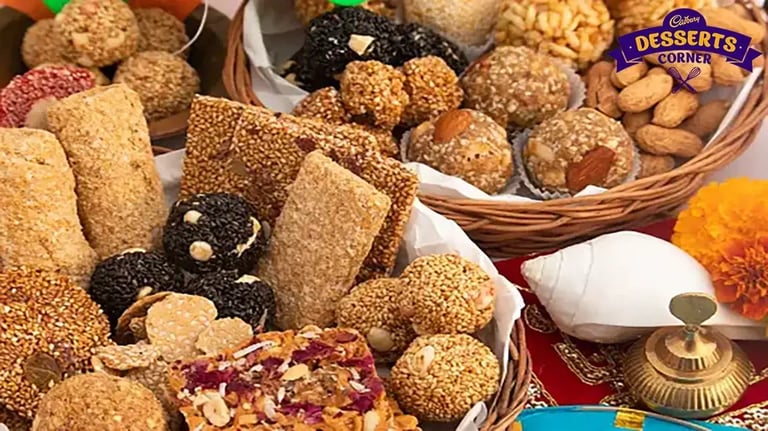
The Hindu festival of Chhath Puja is devoted to the worship of Lord Surya, the sun god, and his consort, Chhathi Maiya. People mostly observe it in the Indian states of Uttar Pradesh, Bihar, and Jharkhand, as well as in certain areas of Nepal. For the devotees, the festival has great cultural and religious significance and is observed with a variety of customs and rituals.
In addition to having a rich cultural history, Chhath Puja is linked to particular recipes. A variety of desserts that showcase the region's cultural identity are made with traditional ingredients and preparation techniques. Jaggery, wheat, rice, and other readily available ingredients from the area are frequently used to make these desserts. The following desserts are frequently served during Chhath Puja:
Traditional Chhath Puja Sweets: Complete List of Sacred Offerings
Thekua – The Most Sacred Prasad of Chhath Puja
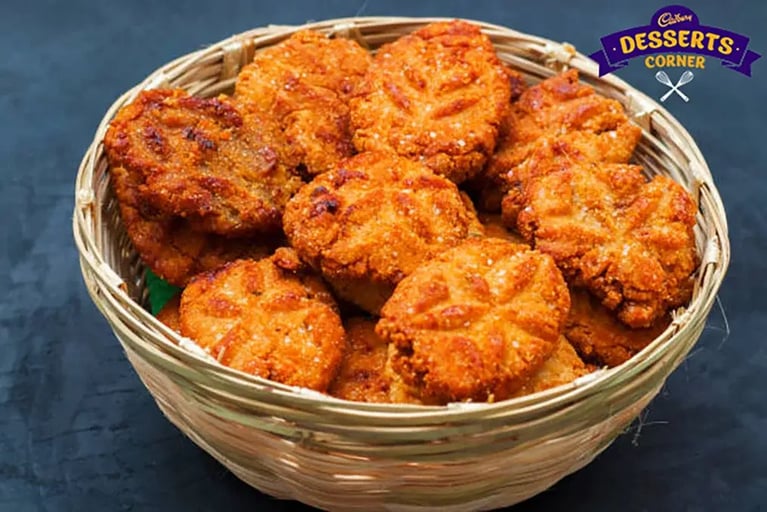
During Chhath Puja, thekua is revered as a sacred offering to the Sun God. As a gesture of appreciation and worship, devotees prepare Thekua and present it to the setting and rising sun. Natural sources provide the ingredients of Thekua, including ghee, jaggery, and wheat flour. During Chhath Puja, Thekua preparation and consumption emphasise a connection with nature and the use of simple, wholesome ingredients. Thekua has a strong cultural connection to the Chhath Puja festival. The preparation of Thekua is a skill that has been passed down through the generations, and the elaborate patterns and designs formed on it before it is fried are frequently regarded as works of art.
Kheer (Rasiyaw) – The Jaggery Rice Pudding of Kharna
During the Chhath Puja rituals, Kheer is frequently prepared as an offering to Lord Surya and Chhathi Maiya. It is regarded as a holy and fortunate dish that represents reverence and adoration for the gods. Offering kheer is thought to appease the gods and ask for their favors for the prosperity and well-being of the devotees and their families. A straightforward but filling dish, kheer is made with rice, milk, sugar, and occasionally cardamom, saffron, or other seasonings. Its simplicity and purity fit in with the traditional and spiritual values of Chhath Puja. A humble offering to the gods and a connection to nature are reflected in the use of simple ingredients. Kheer is frequently eaten as part of breaking the fast, offering a filling and nutritious end to the time spent skipping regular meals.
Pua – The Traditional Fried Sweet Pancake of Bihar
During the Chhath Puja rituals, pua is frequently prepared as an offering to Lord Surya and Chhathi Maiya. Pua, like other traditional sweets, is regarded as a sacred dish, and making it is a way for devotees to show their love and ask the gods for blessings for their families' well-being. A combination of ingredients, including sugar, milk, wheat flour, and occasionally fennel seeds, are used to make pua. Region-specific and family-specific variations exist in the recipe for Pua. The region's cultural identity and the perpetuation of gastronomic customs passed down through the generations are reflected in the preparation of Pua using traditional techniques and ingredients.
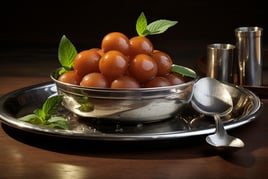
Balushahi – A Rich Festive Sweet With Generations of Tradition
Like many other sweets, balushahi is frequently made as a sacrifice to the gods during Chhath Puja. Hindu culture generally views rains as auspicious. With its rich, sweet flavor, balushahi is a representation of happiness, joy, and good vibrations. Its addition to the festive offerings gives the Chhath Puja rituals an extra dash of auspiciousness. Indian cuisine has a long-standing tradition of preparing balushahi, which is frequently handed down through the generations. Families may decide to cook Balushahi during Chhath Puja as a way to honor their culinary and cultural traditions. This turns the festival into an occasion to celebrate time-honored recipes.
Coconut Ladoo (Naru) – A Jaggery-Based Festival Offering
In the context of Chhath Puja, the significance of Coconut ladoo—or any other sweet dish—would be comparable to the general significance of sweets during Hindu holidays. Sweets are offered as a sign of love, happiness, and blessings shared and are thought to be auspicious. You can think of Coconut Naru as a delightful addition to the offerings if you're planning to incorporate it into your Chhath Puja festivities. The use of coconut and jaggery, two staples of Naru cuisine, is in keeping with the traditional and cultural significance of these ingredients in a number of Hindu holidays. It's wise to inquire about local customs and traditions before making any food-related plans during festivals, as these can differ greatly between communities and regions.
Chana Dal Halwa – A Protein-Rich Celebratory Treat
While there are certain traditional treats associated with Chhath Puja, such as Thekua, Balushahi, and Pua, not everyone prepares Chana Dal Halwa during the celebration. Split chickpeas, or chana dal, sugar, nuts, and ghee (clarified butter) are the ingredients of Chana Dal Halwa. The dish is a special treat for celebratory occasions because of its rich and decadent taste. Because chana dal contains a lot of protein, it is also regarded as nutritive. Chhath Puja is a joyful and celebratory occasion. Families frequently cook special foods, such as desserts, to share with their neighbours, friends, and family. The sweet and comforting taste of Chana Dal Halwa gives the festive meals a festive touch.
Pirikiya (Pirukiya) – Bihar's Traditional Sweet Dumpling for Chhath
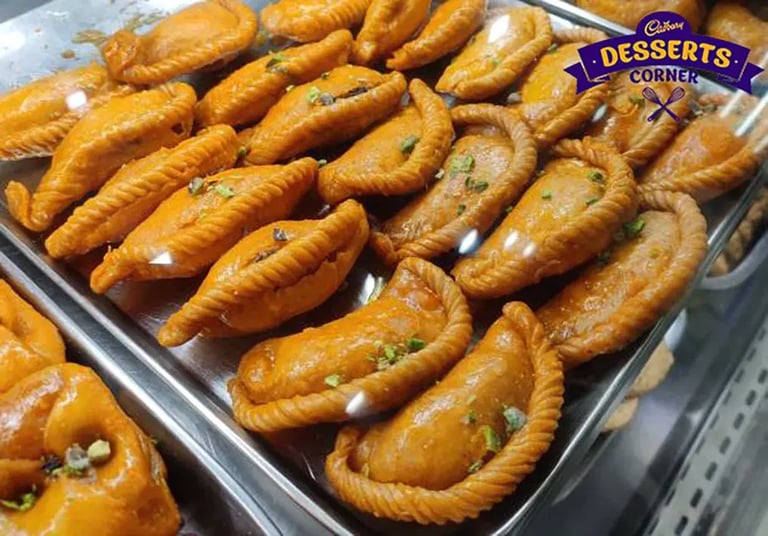
Popular Indian sweet dumplings called pirikiya are traditionally enjoyed during the Holi festival, but they are also enjoyed on other occasions. It is especially well-known in Northern India. To make piriya, stuff a mixture of grated coconut, dry fruits, and reduced milk (khoya) into a dough made with semolina (sooji) or all-purpose flour (maida). After that, the dumpling is sealed and baked or deep-fried until golden brown. This set of sweet is a similar version of gujiya and is offered in chat puja . This is an old traditional and authentic dish of bihar , the preparation of pirikiya is laid down generation to generation . It’s a sight of happiness and togetherness and holds immense religious significance.
Other Traditional Chhath Puja Prasad You Should Know
Chhath Puja has a lot of traditional prasad offerings that hold a deep cultural and religious importance. Kasar, which is made from rice flour and jaggery, is commonly prepared as a simple homemade prasad dessert. Chawal ke ladoo is also rice based and another beloved offering that is often shared with family and friends. Ratauli is a traditional dessert which proceeds to add variety to the festive spread. Fruits are important as well, such as the likes of sugarcane, bananas, coconuts, and pomelo. They are offered to the Sun God and Chhathi Maiya as divide symbols of purity, prosperity, and abundance. Coming all together, these prasad items keep on continuing to reflect the festival’s connection with simplicity, devotion, and traditional family customs.
Frequently Asked Questions
What is the special dessert of Chhath? 
Thekua is the most special dessert of Chhath Puja. It is made with wheat flour, jaggery, and ghee, being crispy outside and slightly soft inside, and is prepared with love as a sacred offering to Chhathi Maiya.
What food is offered during Chhath Puja?
During Chhath Puja, devotees proceed to offer prasads like thekua, rice laddoos, fruits, sugarcane, coconuts, bananas, and other seasonal produce. These are prepared with purity and devotion, which symbolize gratitude, prosperity, and respect for nature and the Sun God.
Can Chhath Puja prasad be made without jaggery?
Yes, Chhath Puja prasad can be made without jaggery by using either sugar or naturally sweet ingredients like dates. However, the traditional recipes usually prefer jaggery for its earthy flavor and cultural significance.
What is Thekua and why is it made for Chhath Puja?
It is a traditional dessert that is made with wheat flour, jaggery, and ghee. It is offered to Chhathi Maiya as a prasad, which symbolizes devotion, gratitude, purity, and the blessings of the Sun God.
The Hindu festival of Chhath Puja is devoted to the worship of Lord Surya, the sun god, and his consort, Chhathi Maiya. People mostly observe it in the Indian states of Uttar Pradesh, Bihar, and Jharkhand, as well as in certain areas of Nepal. For the devotees, the festival has great cultural and religious significance and is observed with a variety of customs and rituals.
In addition to having a rich cultural history, Chhath Puja is linked to particular recipes. A variety of desserts that showcase the region's cultural identity are made with traditional ingredients and preparation techniques. Jaggery, wheat, rice, and other readily available ingredients from the area are frequently used to make these desserts. The following desserts are frequently served during Chhath Puja:
Like This Article?
More Like This


Popular Articles


Trending Web Stories


Curated Recipes


