



4 mins
Aug 6, 2026
EN
हिं
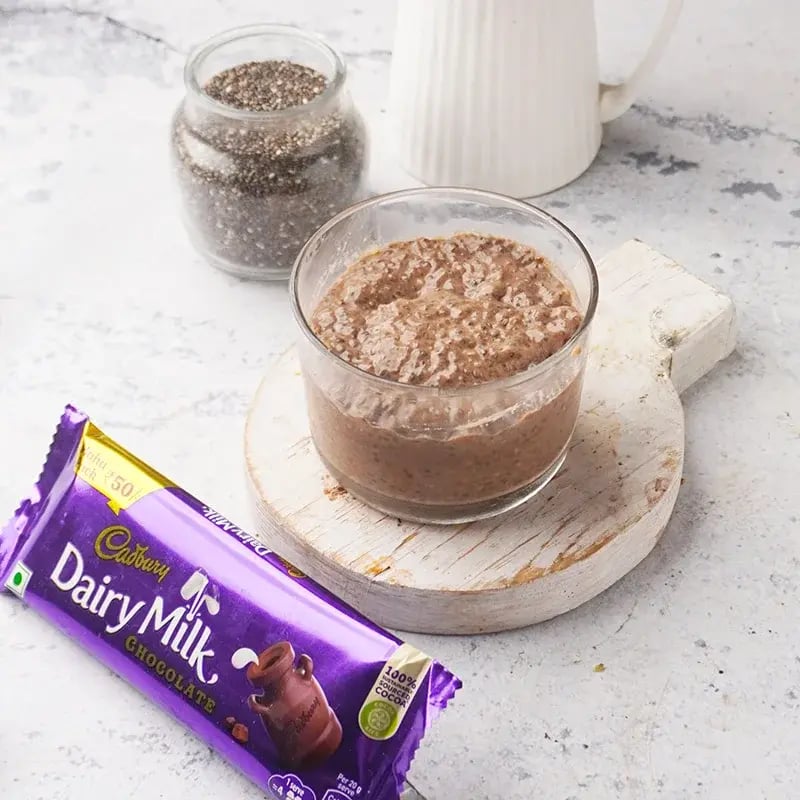
Chocolate Chia Pudding Recipe – Healthy, Easy No-Cook Chocolate Dessert Recipe
 Sunita Chakrabarty

Sunita Chakrabarty
 Published: Jul 17, 2024
Last Updated Date:Jun 24, 2026
Published: Jul 17, 2024
Last Updated Date:Jun 24, 2026


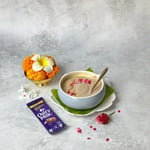
Prepare a no-cook chocolate dessert using chia seeds, creating a pudding with stable consistency, sweetness, and a smooth texture suitable for chilled serving.

Difficulty:easy

Serves:1

Time:35 mins

Contains egg: No
If you are a health-conscious individual you already know what chia seeds and their benefits are. If you’re not, then you’ve come to the right place to learn about them and a yummy recipe that can be a snack or even a great breakfast item. Chia seeds are tiny, black seeds that come from the salvia hispanica plant, which is closely related to the mint family. These seeds were valued for years for their nutritional and medicinal benefits, and have made a comeback in the last fe......Read More
Ingredients You Need
for Chocolate
Chia Pudding
1
serving
How to Make Chocolate Chia Pudding (Step-by-Step Guide)
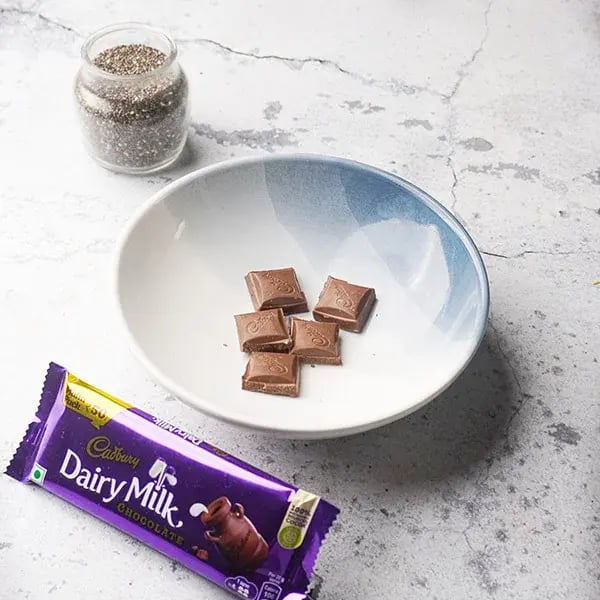
Melt chocolate with warm milk
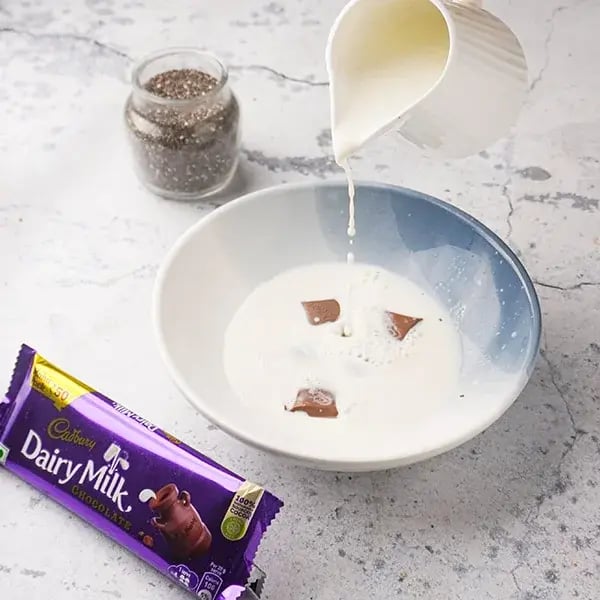
Heat the milk in a small saucepan over low heat until it just starts to steam (don't let it boil). Remove from the heat and add the finely chopped Bournville chocolate. Let it sit for 1 minute without stirring, and then gently stir from the center outwards until completely smooth. The warm milk melts the chocolate evenly without the need for a double boiler, and the chocolate milk that is created is the flavor base for the entire chocolate chia pudding.
Add dry fruits
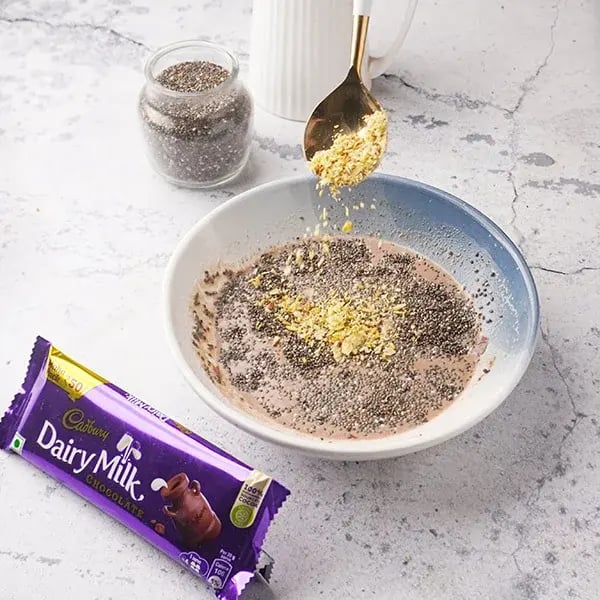
Add the dry fruits to the warm chocolate milk and mix. Adding them now will give them a chance to take on some of the surrounding liquid and soften a little before the chia seeds are added, resulting in a more even texture in the final pudding. Let the mixture cool to room temperature — about 15 minutes — before proceeding.
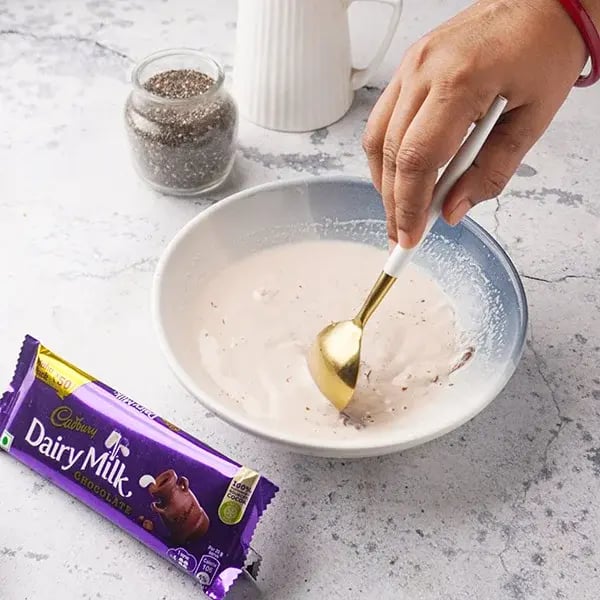
Mix chia seeds
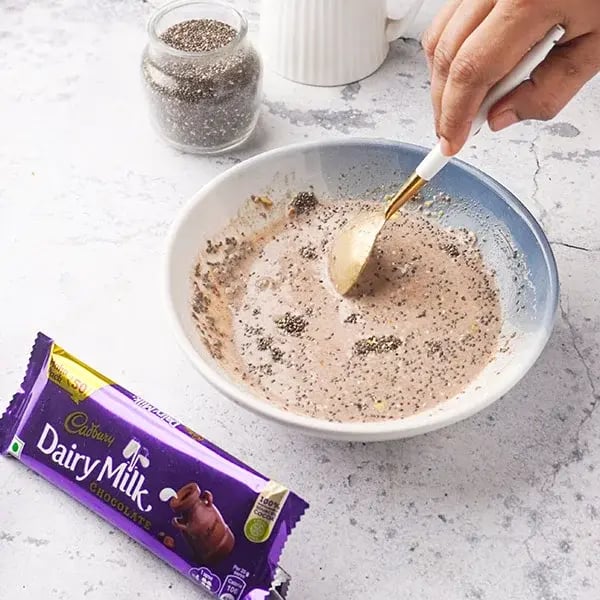
Add the chia seeds into the cooled chocolate milk mixture and whisk vigorously for 60 seconds to make sure the seeds are well distributed in the mixture, and not clumped together. Let stand for 5 minutes, then stir again to break up any clumps that have started to form as the seeds begin their initial gel stage. The second stirring is the most important technique step for a chia pudding with a uniform texture.
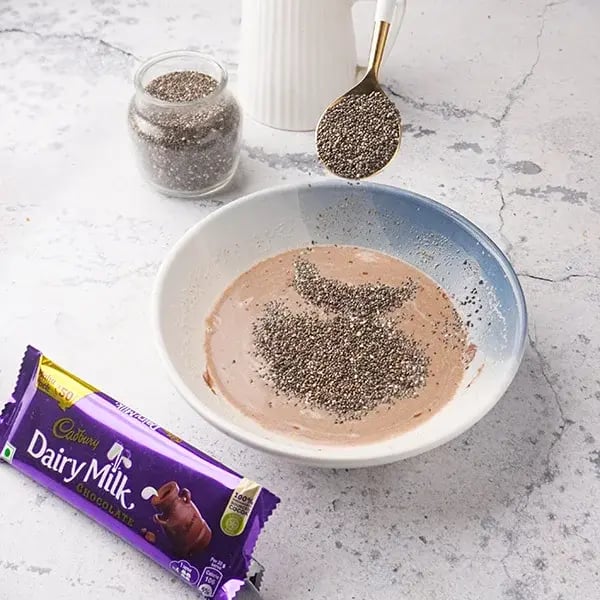
Let it set
Cover the bowl, or transfer to individual serving jars and chill. To make quickly, a set pudding will take at least two hours, soft but holding together. For the best texture and flavor, let it sit in the fridge overnight. An overnight chia pudding will have a denser, more uniform gel and a distinctly richer chocolate flavor, as the cocoa compounds have more time to meld into the chia matrix during the long rest.
Serve chilled
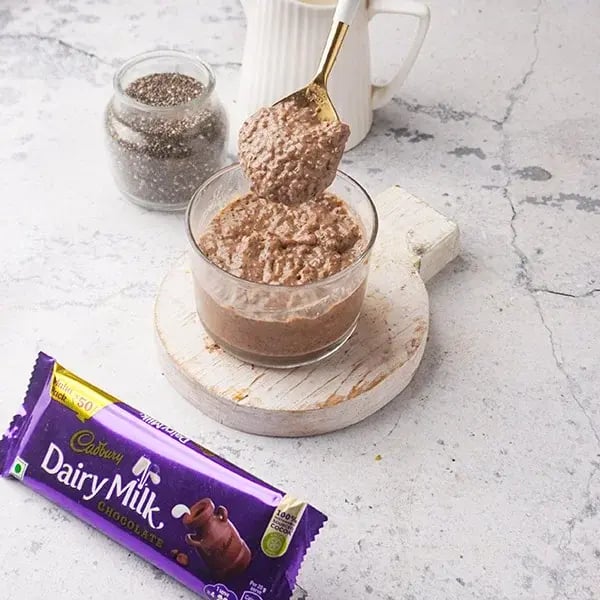
Remove from refrigerator and stir once to re-distribute any separation. Finish with the optional chopped nuts, a scattering of dried fruit or a drizzle of extra melted Bournville and serve straight from the jars for a clean presentation. The pudding should be served cold — warming it converts the chia gel back into a liquid consistency.
What Are Chia Seeds?
Chia seeds are the seeds of Salvia hispanica, a flowering plant in the mint family that is native to central Mexico and Guatemala, where they were a staple food crop of the Aztec and Maya civilizations for at least 3,500 years. Their modern popularity as a functional food ingredient is based on three specific properties. They have an extraordinarily high dietary fiber content (about 34% of total weight), which slows digestion and promotes satiety. They have omega-3 fatty acids in the form of alpha-linolenic acid, which is associated with markers of cardiovascular health. They have the ability to form a gel when hydrated, which makes them uniquely suited to no-cook pudding and breakfast preparation formats. A 30-gram portion of chia seeds has around 140 calories, 10 grams of fiber, 5 grams of protein, 9 grams of fat — mostly omega-3 — and good amounts of calcium, phosphorus and magnesium. Mucilage is a soluble fiber that, when in contact with liquid, will form a viscous gel around each seed structure, trapping water inside the matrix and producing the familiar thick, pudding-like consistency without any cooking or added thickener.
What Is Chia Seed Pudding? (And Why It’s So Popular)
No-cook dessert concept
Chia seed pudding is a combination of chia seeds and a liquid, like milk, plant-based milk, or fruit juice, mixed in proportions that result in a gel-set pudding after at least two hours of sitting—no cooking, no heat, no thickening agent other than the seeds themselves. The format originated in North American health food culture in the early 2010s, coinciding with the larger superfood trend that promoted chia seeds as a nutrient-dense ingredient.
Gel-like texture formation
Three things have made this product a favorite: real nutritional value, simplicity of preparation, and flexibility as a base that takes on almost any flavor combination – fruit, chocolate, vanilla, matcha, and spice all work equally well as the fluid flavoring component.
Trending healthy food
The chocolate chia pudding form is for those who want the nutritional profile of a chia dessert, but with the flavor satisfaction of a truly chocolate-forward preparation, not a mildly flavored health food.
Chocolate Chia Pudding vs Chocolate Pudding – What’s the Difference?
Dairy-based vs chia-based
A classic chocolate pudding is a starch-thickened cream-based preparation, usually made with full-fat milk, cream, caster sugar, cornstarch, cocoa powder and egg yolks, cooked over heat until the starch gelatinizes to give a smooth, set dessert. It is high in saturated fat, refined sugar and calories and has a cooking process that requires constant stirring and temperature control. Chocolate chia pudding is cold-set and requires no cooking.
Texture comparison
The thickening agent is the chia seeds, not refined starch, and it can be made with plant-based milk for a totally dairy-free choice. The most obvious difference is texture—traditional chocolate pudding has a smooth, starchy mouthfeel and is consistent; chia pudding is textured, a little gelatinous from the gel coatings around the individual seeds
Health differences
On the nutrition front, the healthy dessert crown belongs to chia pudding – chia’s fiber, protein and omega-3 content is a far cry from a traditional chocolate pudding:
Why Chocolate and Chia Seeds Work So Well Together
Dark chocolate and chia seeds in a pudding format work for reasons beyond good flavour pairing. The fat-soluble esters, terpenes and other aroma compounds responsible for the complex flavor of chocolate dissolve into the fat content of the milk base and become trapped in the matrix of the set chia gel, creating a preparation where the chocolate flavor is evenly distributed throughout every spoonful rather than being concentrated on a surface layer. The neutral, slightly nutty background character of soaked chia seeds does not compete with the chocolate note, but rather serves as a flavor carrier rather than a flavor contributor. The textural contrast works well in the chocolate chia pudding format, too: the slightly chewy seed gel against the smooth, chocolate-flavored liquid base makes for a more interesting eating experience than a uniformly smooth chocolate pudding. It’s this combination of flavor distribution chemistry and textural interest that makes chia chocolate pudding one of the most widely replicated healthy dessert formats worldwide.
How to Get the Perfect Chia Pudding Texture
Chia-to-liquid ratio
The chia-to-liquid ratio determines the texture of chia pudding. Too few seeds and the pudding will be thin and watery and won’t set; too many, and it will be thick and gluey and not pleasant to eat. The usual ratio is 3 tablespoons of chia seeds to 240ml of liquid, which makes a soft, spoonable pudding after an overnight setting.
Stirring method
The way you stir is just as important as the ratio: whisking vigorously immediately after mixing, allowing to rest for 5 minutes, then stirring again before the final set, prevents the seeds from clumping and creating pockets of ungelled seeds in an otherwise well-set pudding.
Ideal soaking time
Best soaking time is a minimum of two hours at refrigerator temperature – shorter times result in a partially gelled product with a liquid center to each seed that is texturally unpleasant. Chilling overnight produces the most uniform, fully gelled result.
Overnight Chia Pudding – Why It’s the Best Method
Better texture
For three reasons, the product is always better when you do it overnight. The method is to combine everything the night before and refrigerate for 8-12 hours. It is better than any method that takes less time. The first is texture improvement. The longer rest period gives each chia seed time to fully hydrate and complete its gel formation, so you end up with a uniformly thick, cohesive pudding, rather than the partially gelled, slightly crunchy result of a minimum two-hour set.
Improved absorption
The second is flavor deepening, in which the chocolate compounds in the milk base continue to integrate into the chia gel structure throughout the overnight period, so that the same preparation tastes more complex and unified in the morning than after only two hours.
Ideal for meal prep
The third is utility for meal prep: a chia pudding that's made on Sunday night is a ready breakfast or snack for Monday morning and requires zero prep time when you're ready to eat it. Making five jars at a time, one for each day, means you have a full week of breakfast or healthy dessert portions with less than 10 minutes of prep time on Sunday.
Is Chocolate Chia Pudding a Healthy Dessert?
High fiber and protein
Chocolate chia pudding is a healthy dessert when compared to the nutritional profile of regular desserts in the same serving size. For example, a 200-gram serving of chia pudding made with full-fat coconut milk, dark chocolate, and no added sweetener contains about 8 to 10 grams of fiber, which is a large chunk of the recommended daily intake, 5 to 6 grams of protein, and omega-3 fatty acids from the chia seeds.
Sustained energy
In particular, the fiber content of the salad induces a satiety that extends far beyond the amount consumed, thereby reducing total calories consumed over the next meal period.
Portion-controlled indulgence
This vegan dessert style made with plant-based milk and dairy-free dark chocolate offers these benefits without any animal-derived ingredients. The important thing is portion control – full-fat coconut milk is relatively high in fat, and eating very large amounts reduces the net nutritional benefit when compared to conventional desserts. For nutritional and flavor benefits, a serving size of 150 to 200 grams is appropriate.
Can You Make This a Vegan Dessert?
Plant-based milk options
Yes – this chocolate chia pudding easily becomes a fully plant-based version. For the milk base, canned full-fat coconut milk will give you the richest, most pudding-like outcome; oat milk makes for a lighter, slightly sweeter base that complements the chocolate flavor; almond milk yields the thinnest base and will require a bit more chia seeds for a similar gel density.
Dairy-free chocolate
Most dark chocolate over 55% cocoa is made without dairy in the chocolate component, so checking the label for milk solids ensures the preparation is fully vegan. In its standard formulation, Bournville should be checked for its label for the market version of the product being used.
Vegan sweeteners
The most common vegan dessert substitutes for honey as a sweetener are agave nectar and maple syrup. When full-fat coconut milk is used as the base liquid, the finished preparation is nutritionally and texturally identical to the dairy version.
Pro Tips for Perfect Chia Dessert Every Time
Mix thoroughly to avoid clumps
Add chia seeds to liquid and stir just once, to make clumps of seeds that gel together as a mass, rather than a distribution of individual seeds throughout the liquid. Whisk vigorously for 60 seconds right after mixing and let sit for five minutes. Stir and refrigerate. This method eliminates the formation of clumps. This two-stir method is the single most effective method for a uniformly textured chia dessert.
Use good quality chocolate
The chocolate in this recipe is the star of the show – its quality is directly reflected in the final chocolate chia pudding without any other ingredient covering it up. At the usual 45-50% cocoa, Bournville gives a balanced, moderately intense result. The higher the percentage of dark chocolate, the more bitter and complex the preparation is, making it suitable for adult palates. Compound chocolate or flavored chocolate chips produce a flat, less complex flavor that isn't worth the effort to make them.
Adjust sweetness
The perceived sweetness of a chocolate pudding preparation is very different from the liquid to the gelled state – the gel formation concentrates flavors, and the cold temperature suppresses sweetness perception. You get better calibration by tasting the pudding once it’s been set overnight, and then adding a bit more honey or maple syrup at that point, rather than sticking the sweetener in the warm liquid base and working from that.
Variations of Chocolate Chia Dessert You Can Try
A berry chocolate chia pudding layer, fresh or frozen mixed berries, between two layers of the standard chocolate chia pudding in a tall glass, the fruit’s natural acidity contrasting against the chocolate-cocoa base. A protein chia dessert adds one scoop of chocolate protein powder to the liquid base before the chia seeds are added, making a serving that has approximately 20 grams of protein and is a great post-workout snack. For the layered chia parfait, layer the chocolate chia base with a plain vanilla chia layer (same ratio, but using vanilla-flavored plant milk) in a clear glass for a two-tone visual presentation.
Creative Serving & Presentation Ideas
Clear glass jars, 200- to 250-ml mason jars, are good for the set chia-pudding texture, and the layered presentations can be visually effective before the first spoon is taken. More formal presentation for a dessert table or dinner party service is found in layered dessert cups in small, clear dessert glasses. Just before serving, a thin drizzle of more melted Bournville is spiralled across the top of the set pudding, providing the visual chocolate note and a flavour-concentrated surface layer. The contrast for the uniformly soft chia seed pudding base comes in the form of a scattering of roughly chopped toasted nuts—almonds, hazelnuts or walnuts—that give the crunch it craves on its own.
Common Mistakes to Avoid While Making Chia Pudding
Too many chia seeds
More than 4 tablespoons per 240 ml of liquid makes a stiff, gluey mass, not a soft, spoonable chia pudding. The right ratio is essential and cannot be compromised – once the pudding has set, there is no going back.
Not mixing properly
A single stir of chia seeds into liquid creates visible clumps that persist in the finished pudding regardless of soak time. The prevention is the two-step method — immediately after you mix, then five minutes later.
Insufficient soaking
Chia seeds need at least two hours, and ideally eight, to form their full gel. A pudding opened at 60 minutes is ungelled in the middle of the clumped seeds and has a crunchy, unpleasant texture.
Thick or watery consistency
This happens if you don’t use enough chia seeds for the amount of liquid, or if you use a very low-fat liquid such as skimmed milk or water, which doesn’t help build up the body of the pudding. Both problems can be solved by either increasing the quantity of seeds or by changing to coconut milk with full-fat content.
How to Store Chia Pudding Properly
Chocolate Chia Pudding will last up to five days from preparation in sealed airtight jars in the refrigerator. The texture and flavor at the five-day point is similar to the overnight result – chia seeds do not degrade in quality during the refrigeration period, and the chocolate flavor deepens slightly over the first 24 to 48 hours. For meal prep, you can make five individual 200ml jars at once for a whole working week of ready breakfasts or healthy dessert servings. Don't freeze: freezing reverts the chia gel structure to a liquid as the ice crystals shatter the gel matrix during the freeze, and the thawed result is watery and ungelled, rather than pudding-like, no matter how long it is re-refrigerated.
FAQs About Chocolate Chia Pudding
How long should chia pudding soak? 
A partially set chia seed pudding that is edible but not at peak texture will hold for at least two hours at refrigerator temperature.
Can I make chia pudding without milk?
Yes – coconut water, fruit juice or plain water can be used instead of milk in a chia pudding preparation. The chia seed gel formation mechanism works in any liquid.
Is chia pudding good for weight loss?
Chia seeds in a properly portioned pudding preparation help in weight management because they have a high fiber content, which provides sustained satiety longer than the portion eaten.
Can I eat chia pudding daily?
Yes — for most adults, chia seeds are safe to consume daily, up to 50 grams per day. 30 to 40 grams per serving is what is used in a standard chia dessert preparation.
Can I make this as a quick no-cook dessert?
Yes, chocolate chia pudding is totally no-cook. The only heat involved is heating the milk to melt the chocolate, which can be done in a microwave in 45 seconds.
Like This Recipe?

Thank you for rating the recipe!
Recipe by Categories
Popular Articles
Sweet Celebrations Effortless Office Party ...

Teddy Bear Chocolate Cookies: Perfect Bakes For ...
5 mins
Sep 30, 2026
The Sweet Grand Finale: A Complete Guide To Onam ...
3 mins
Jul 2, 2026
Corporate Celebrations: Festive Independence Day ...
3 mins
Jul 5, 2026
Effortless Independence Day Treats: Quick No-Bake ...
3 mins
Jul 6, 2026
Recommended Recipes