







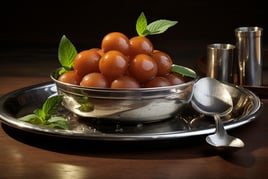




Looking for sweets for the Tamil New Year? Try these easy puthandu sweets and classic Tamil New Year sweets with a creative, modern twist.
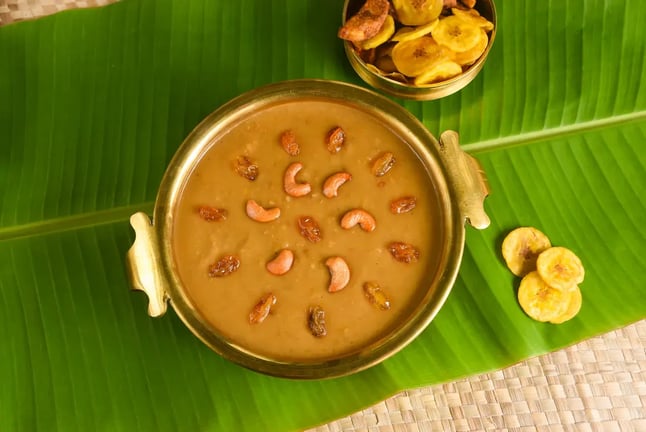
What’s the first thing you associate with celebrations? It’s always sitting down with family, sharing meals, and enjoying festive treats. Tamil New Year, also known as Puthandu, is no different. This beautiful festival marks new beginnings and prosperity, and no celebration is complete without a variety of traditional sweets for Tamil New Year.
From rich jaggery-based dishes to light coconut treats, tamil new year sweets bring together flavors, memories, and tradition. These desserts are not just about taste—they carry stories passed down through generations, making every bite meaningful. Each household has its own special recipes, often prepared with love and shared with family and neighbors.
Whether you enjoy classic payasam or want to explore creative twists, puthandu sweets offer something for everyone. This year, you can revisit timeless recipes or experiment with new variations to make your festive table even more special.
The Significance of Sweets in Tamil New Year Celebrations
Tamil New Year, or Puthandu, is usually celebrated on April 14th and marks the beginning of the Tamil calendar year. It symbolizes renewal, prosperity, and hope for the future. One of the most meaningful traditions is the Kanni, where you start the day by seeing auspicious items like fruits, flowers, gold, and sweets, believed to bring good fortune for the year ahead.
Sweets play a central role in the celebration, especially as part of Naivedyam (offering to God). Traditional Tamil New Year sweets like Paruppu Payasam and Nei Appam are prepared and offered to deities before being shared with family. Jaggery, a key ingredient in many sweets for the Tamil New Year, is considered auspicious as it symbolizes sweetness and positivity in life.
Preparing a variety of puthandu sweets is also a way of expressing joy and abundance. Families often make large quantities of sweets and distribute them among neighbors and loved ones, strengthening bonds and spreading festive cheer. These traditions highlight how food becomes a medium of love, gratitude, and cultural identity during the Tamil New Year.
9 Tamil New Year Desserts
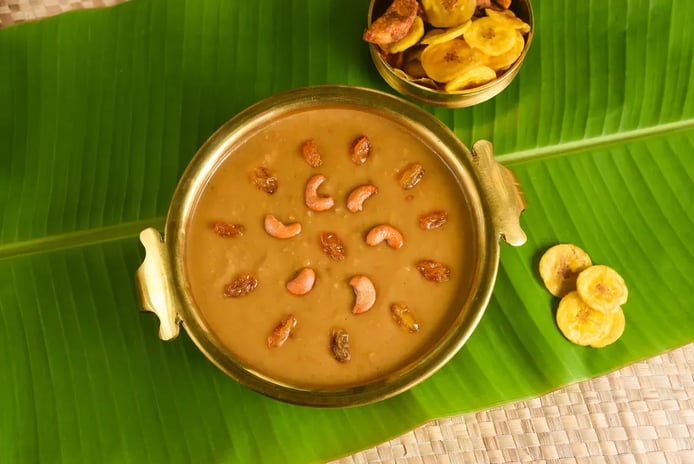
Paruppu Payasam — The Classic Tamil Moong Dal and Jaggery Kheer
A classic in Tamil homes, this sweet is prepared using moong dal, jaggery, and coconut milk, slow-cooked until it becomes rich and fragrant. The addition of cardamom and topping with ghee-roasted cashews and raisins add richness to the dish. It is best served hot and is usually made on festive days as an offering before being distributed among family and friends.
Akkaravadisal — The Saffron-Scented Tamil Sweet Pongal Made with Milk and Jaggery
A richer variety of sweet pongal, akkaravadisal is prepared with rice, moong dal, and lots of milk. Jaggery imparts deep sweetness, while saffron and cardamom deepen its aroma. The preparation is topped with ghee-fried nuts, and thus it is a great festive treat for Tamil New Year celebrations.
Pasi Paruppu Laddu — Melt-in-the-Mouth Moong Dal and Jaggery Balls
Made with roasted moong dal, jaggery, and ghee, these laddus are simple yet packed with flavor. They have a soft and melt-in-the-mouth consistency, making them a favorite across all age groups. Rolling them into small balls while still warm ensures they hold their shape perfectly.
Coconut Poli — The Golden Ghee-Roasted Flatbread Stuffed with Coconut and Jaggery
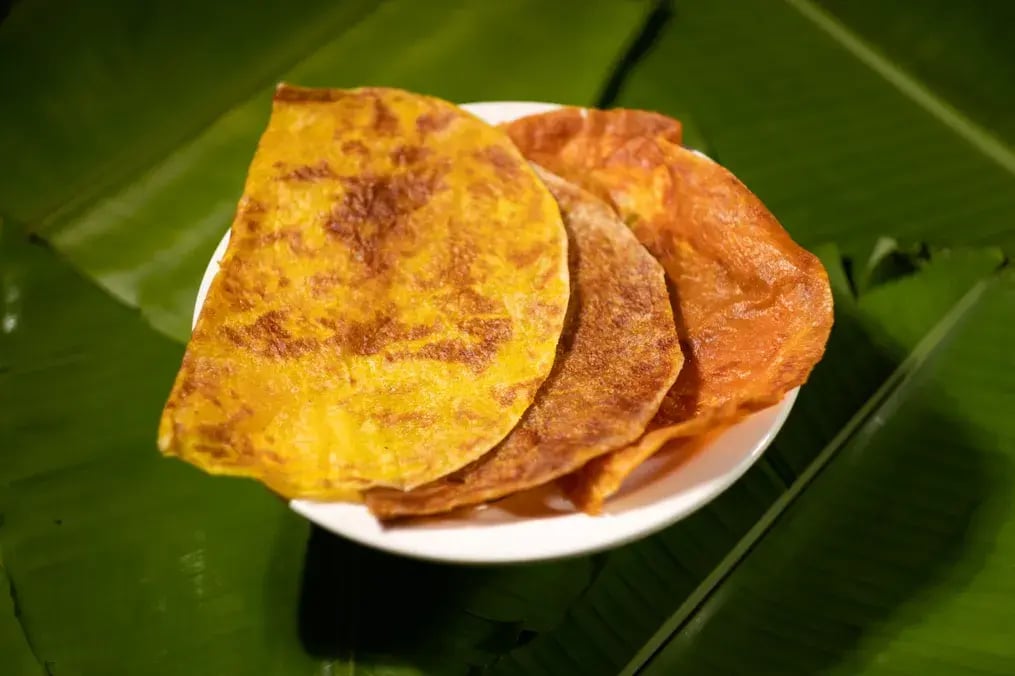
A sweet turn on the traditional poli, this one has a sweet coconut and jaggery filling inside. The dough, prepared from all-purpose flour, is rolled very thin, filled generously, and cooked on a hot griddle with ghee. This yields a crisp, golden-colored poli with a scented coconut filling inside.
Elaneer Payasam — A Chilled Tamil Tender Coconut Dessert Perfect for Summer
The tender coconut adds a cool twist to this rich dessert. Prepared with coconut milk, condensed milk, and tender coconut pieces, this payasam is light but indulgent. Refrigerated before serving, it is a great Tamil New Year treat for hot weather.
Chocolate Twist Rava Kesari — A Modern Fusion Take on the Tamil Classic
Rava kesari is a popular sweet, but with a chocolate twist, it becomes too tempting. Prepared with roasted semolina, sugar, and ghee, this one has a cocoa infusion that adds an exciting turn to the traditional dessert, which even adults will love.
Kadalai Urundai — Crunchy Tamil Peanut and Jaggery Balls That Keep for Days
These peanut and jaggery balls are easy, wholesome, and full of delectable crunch. Roasted peanuts are ground and mixed with melted jaggery and formed into small spheres when still warm. A festival favorite during Tamil festivals, they keep well and are a healthy sweet snack.
Nei Appam — Crispy Ghee-Fried Tamil Rice Flour Fritters with Jaggery and Banana
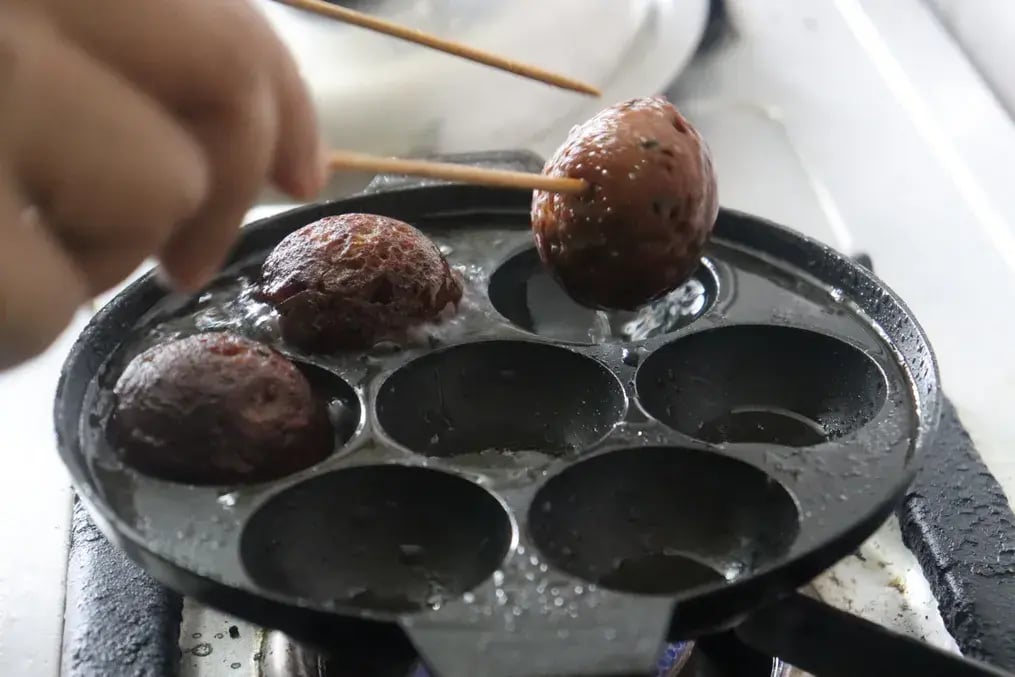
Crisp on the outside and tender on the inside, nei appam is a classic Tamil sweet that consists of rice flour, banana, jaggery, and cardamom. The batter is deep-fried in ghee until golden brown, and the sweet is aromatic and fulfilling.
Carrot Badam Halwa — A Rich Tamil Fusion Halwa with Grated Carrot and Almond Flour
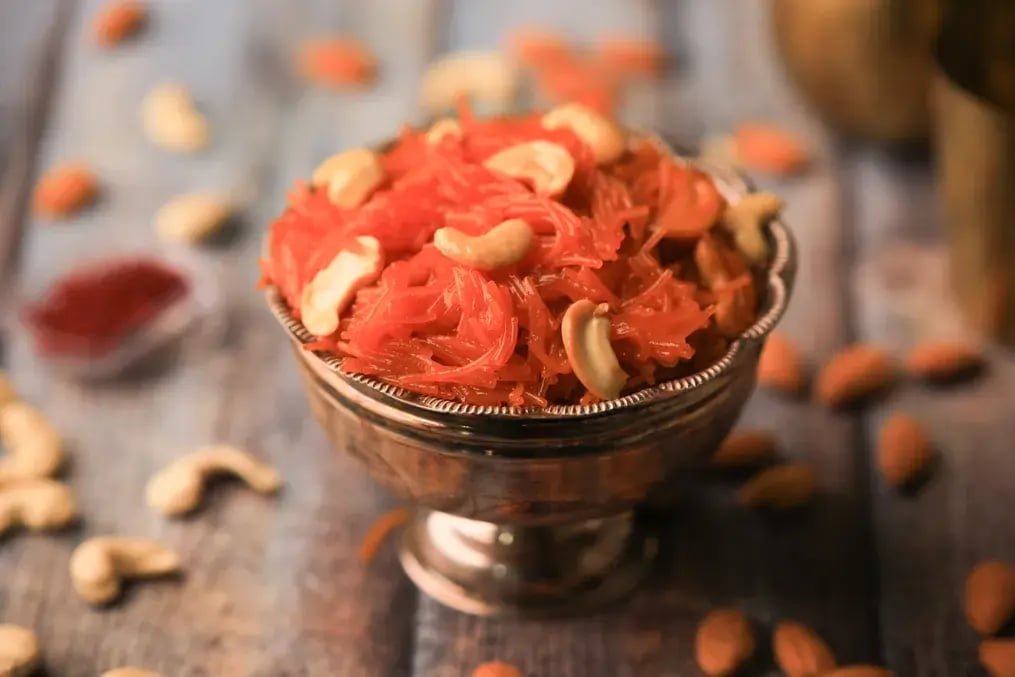
A rich dessert consisting of grated carrots, almond flour, milk, and ghee, cooked low and slow to perfection. The sweetness of carrots combines magnificently with the richness of almonds, and it makes a great item for the Tamil New Year menu.
Frequently Asked Questions
What is payasam and how is it different from kheer? 
Payasam is a South Indian dessert made with milk, jaggery, or coconut milk, while kheer is its North Indian counterpart. The main difference lies in ingredients and flavor profiles.
What are the easiest Tamil New Year sweets to make at home?
Simple options include rava kesari, coconut laddoos, and quick payasam. These sweets for Tamil New Year require minimal ingredients and are easy to prepare.
What is the significance of offering sweets as naivedyam on Tamil New Year?
Offering tamil new year sweets as naivedyam symbolizes gratitude and devotion. It is believed to invite blessings, prosperity, and sweetness into the new year.
Can Tamil New Year sweets be made without dairy?
Yes, many puthandu sweets use coconut milk instead of dairy. This makes them suitable for vegan diets while still maintaining traditional flavors.
Like This Article?
More Like This


Popular Articles


Trending Web Stories


Curated Recipes


