





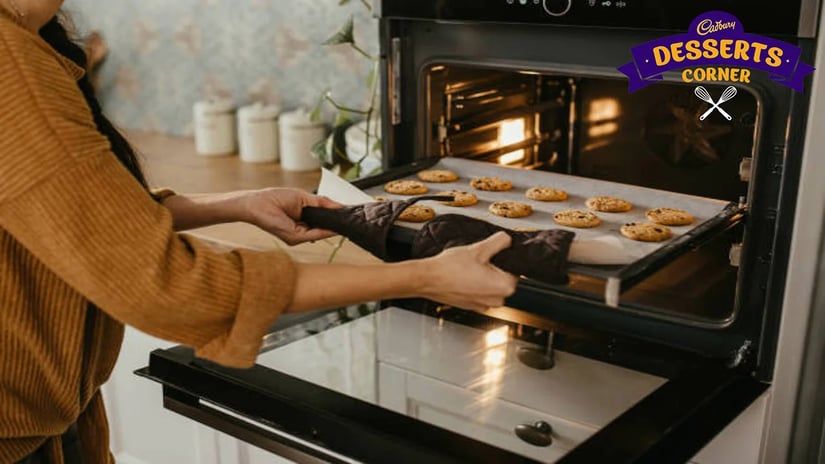


If you are new to baking, then it could get really confusing at times with different baking terms that you may not be familiar with. There are often some words that, in the baking context, mean differently than they do normally.
If you are new to baking, then it could get really confusing at times with different baking terms that you may not be familiar with. There are often some words in the baking context that mean differently than they do normally.
Baking is a wonderful way to create delicious desserts and treats that you can enjoy any time of the day, especially breakfast. From the aromatic bread to the creamy pastries, nothing tastes better than freshly baked goods, but if you are new to it, there could be some confusion around the baking terms, and it could even get overwhelming at times. Mastering the baking language is as good as mastering the recipes, as understanding them completely will help you get the best results.
In part- 3 of baking terminology, we will look at the common baking terms from the letters M to S to help you understand baking better.
M — Baking Terms Starting with M
Macerate
This is a process that refers to the softening of any food by soaking it in a liquid.
Marble
It refers to creating a swirl effect by incorporating two doughs or batters of different colors or flavors together.
Mature
It is used in the context of food when it has developed to its full potential and now imparts a strong and rich flavor.
Mince
To chop something very finely using a knife or any sharp object.
Marble
It refers to creating a swirl effect by incorporating two doughs or batters of different colors or flavors together.
Mold
Molding is a process where you pinch or give shape to something, for example, a bread dough or a pie dough, before baking.
N — Baking Terms Starting with N
Nut Flour
A type of flour that is created from ground nuts such as almonds, cashews, hazelnuts, and more. They are gluten-free.
O — Baking Terms Starting with O
Oven Spring
The quick rise of bread dough in the oven is caused by gas bubble expansion and yeast activation. It produces a lighter and more airy loaf.
P — Baking Terms Starting with P
Pastry Bag
Made from paper, plastic, or cloth, it is a cone-shaped bag. Its main function is to pipe batter, frosting, dough, whipped cream, or other soft mixtures into different designs and shapes. Its tip determines the shape and size of the piping.
Pastry Brush
It is used to apply or glaze baked goods with egg wash, melted butter, or any other mixture. It has soft bristles and is usually small in size.
Q — Baking Terms Starting with Q
Quiche
Quiche is essentially a savory pie that is known for its pastry crust that is filled with cream, cheese, bacon, mushrooms, ham, eggs, and more. It has a golden-brown color.
R — Baking Terms Starting with R
Ramekin
It is a small dish made of glass or ceramic that is used for serving baked goods like custards, cakes, souffles, and more.
Rise
It refers to the process of increasing the volume of a dough with the help of yeast or other leavening agents.
Roll Out
Using a rolling pin, flatten the dough into a thin sheet. This method is used to make pie crusts, cookies, pastries, pizza doughs, and other baked goods.
S — Baking Terms Starting with S
Scald
This is a process where a liquid like milk or cream is heated just to the point where it comes to a boil but does not actually start to boil. It is done to eliminate the bacteria and/or active enzymes.
Score
Scoring means putting shallow cuts on the surface of meat or dough in order to control expansion, allow a better infusion of flavors, or create a pattern.
Sift
A process where dry ingredients like sugar, flour, or cocoa powder are sieved through a fine mesh sieve in order to remove any impurities or lumps and aerate them.
Frequently Asked Questions
What are the most important baking terms a beginner should know? 
Beginners should be able to understand simple baking terms like preheat, whisk, fold, sift, cream, knead, proof, grease, and bake. Knowing what these words mean makes the recipes less confusing, and helps you feel more confident while baking.
What is the difference between sifting and whisking flour?
Sifting flour removes lumps and adds air, which creates a lighter texture. Whisking means mixing flour with other dry ingredients, helping distribute things like salt, baking soda, or spices without significantly creating air in the flour.
What baking terms are covered in parts 1, 2, and 4 of this series?
The terms that are covered in parts 1,2 and 4 of this series are as follows: aerate, batch, beat, blend, chop, defrost, essence, fold, temper, torte, whip, whisk, yield, zest etc.
Like This Article?
More Like This


Popular Articles


Trending Web Stories


Curated Recipes