










The classic Dum Ke Roat defines the sweetness of Hyderabadi cuisine. Loved for its rich taste and comforting texture, this sweet treat can easily be prepared at home.

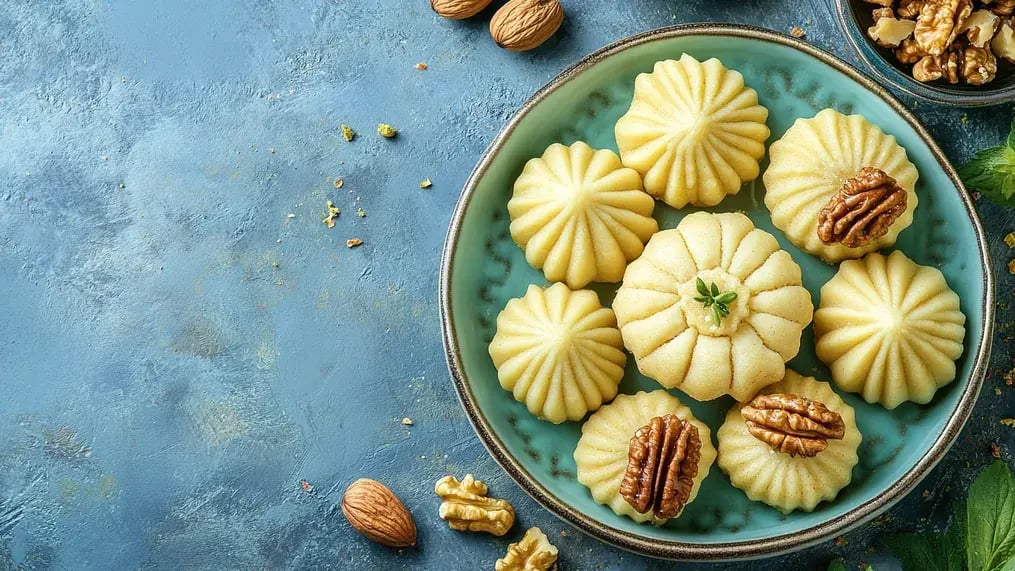
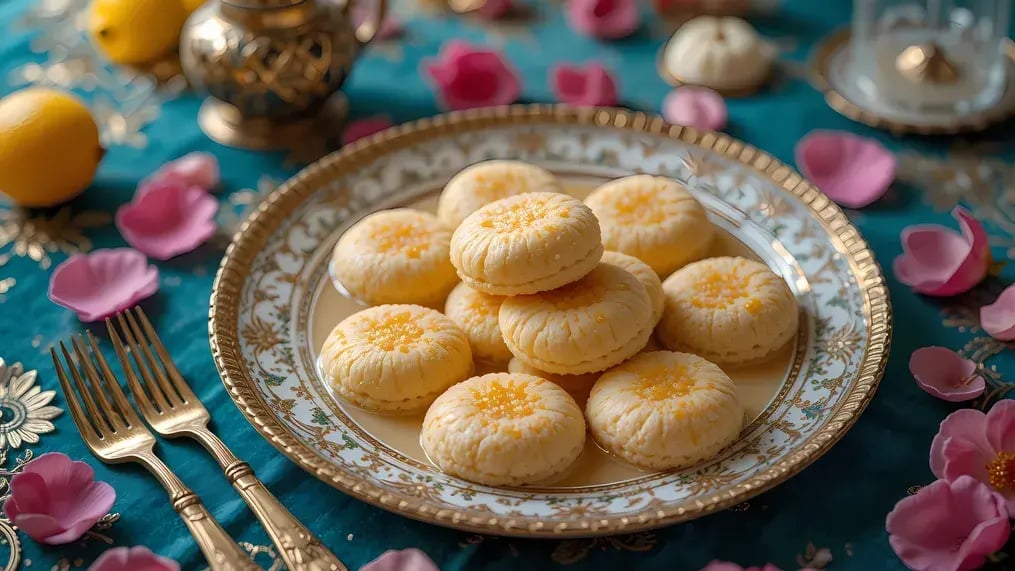
Dum ke roat is a popular sweet treat from Hyderabad. With every single bite, this carries a sense of home and culture. They are made in a more intricate way with a careful process to resemble the depth of culture and tradition. This treat resembles cookies, but it is actually not a cookie. Instead, dum ke roat is denser, richer, and wholesome because it uses ingredients like sooji, mawa, jaggery, and traditional spices, which are often missing in the westernized cookie recipes. This treat is often associated with the Muharram festival in Hyderabad and is offered as “niyaz” or a religious offering on the 10th day of Muharram.
The name ‘dum ke roat’ gives an idea of how the recipe is made. The word “dum” denotes that the treats are slow-cooked to perfection, usually in a tightly covered skillet or in an oven on very low heat. The word “roat” denotes a dense, cake-like sweet which is often round and thick, and with a golden crust that is soft from inside. The recipe contains nuts and ghee, which brings a rich element. It is often flavored with cardamom, rose water, and kewra water for a royal aroma. Prepare this sweet delight at home without the need for an oven with this simple recipe and share it with your friends and family to make the festival memorable.
The History & Significance of Dum ke Roat
A Royal Legacy
This traditional slow-baked dessert carries a royal legacy since the 1900s. It is relieved that the Nizam VII, Mir Osman Ali Khan, created this sweet dish as a religious offering while praying for the safety and well-being of his grandson Murakkam Jah. Besides this narrative, during Muharram, it is also believed to serve as a culinary tribute to the martyrdom of Prophet Muhammad’s grandson, Imam Hussain, at the Battle of Karbala.
Roat Recipe: Ingredients You Need for Authentic Roat
Ingredients
- 1 cup Semolina (sooji/rava)
- ½ cup All-purpose flour (maida)
- 1 cup Jaggery (grated or powdered)
- ½ cup Milk
- ¼ cup Ghee
- 2 tbsp yogurt
- ¼ teaspoon baking soda
- 1 teaspoon cardamom powder
- 3 tablespoons chopped nuts (almonds, cashews, pistachios)
- 2-3 tablespoons khoya
- 1 teaspoon rose water or kewra water
The Role Of Key Ingredients In Roat Recipe
Made with semolina or sooji as the main ingredient, it is ideally combined with all-purpose flour or maida, jaggery, melted sugar, khoya, ghee, milk, saffron, and cardamom for flavor.
Semolina: This is the core ingredient of the delicious Hyderabadi delicacy. It is semolina that brings in the signature grainy and firm texture that holds up during the slow-cooking process.
Ghee: Besides doing its job as the primary source of fat, ghee also infuses a classic aroma and a rich flavor.
Khoya: While semolina binds the dough and ghee adds flavor and aroma, the intense richness of Dum Ke Roat comes from these dried milk solids that add the fudgy, creamy, or milky undertone.
Cardamom: This aromatic spice lends a spicy, sweet twist in taste and flavor that takes the overall experience to a whole new level.
Milk: In this recipe, milk does the job of binding the dough well and kneading it into a soft texture.
Sugar: The subtle sweetness comes from the careful use of sugar. Besides, when caramelized properly, it also creates a chewy texture.
Step-by-Step: How to Make Dum ke Roat Without an Oven
Preparing the Dough
Step 1: Make the Batter
Take a large mixing bowl and combine the semolina, all-purpose flour, and baking soda. Add the melted jaggery, milk, yogurt, cardamom, and ghee, and mix well to make a thick batter. Fold in crumbled khoya, rose or kewra water, and chopped nuts. Combine these ingredients well. Once combined, cover the batter and let it rest for about 1 to 2 hours. This technique will help the semolina soften and soak up the water, and also ferment a little bit.
The ‘Dum’ Cooking Method on Stovetop
Step 2: Prepare for Dum
Take a heavy-bottomed non-stick pan or a griddle and grease it with a little bit of ghee. Place a thick steel or aluminium plate inside it like a makeshift baking tray base contraption. Preheat this on low heat for 5 minutes. This will act like your stovetop oven base and will help you make dum ke roat without an oven.
Step 3: Cook the Roat
Grease a small round steel thali or a cake tin and pour the batter into it. Smooth out the top with the help of a spatula so the surface becomes even.
Now carefully place this tin into the preheated base inside the pan and cover the pan with a tight-fitting lid so that the heat doesn’t escape and the roast can be cooked evenly.
Place a weight or a heavy object on top of the lid to seal in heat, and cook it on very low heat for about 30 to 40 minutes.
After 25 minutes, check the doneness of the dum ke roat with the help of a toothpick. If the toothpick comes out clean means the roat are cooked from the inside. If the top is set and the inside looks cooked, turn the heat off and let cool before unmolding the roat.
Step 4: Garnish & Serve
Once the dum ke roats have cooled down, unmold them and take them out on a plate. Garnish with chipped nuts and ghee drizzle for decoration and serve it warm.
How To Bake Dum Ke Roat in an Oven
Make the dough
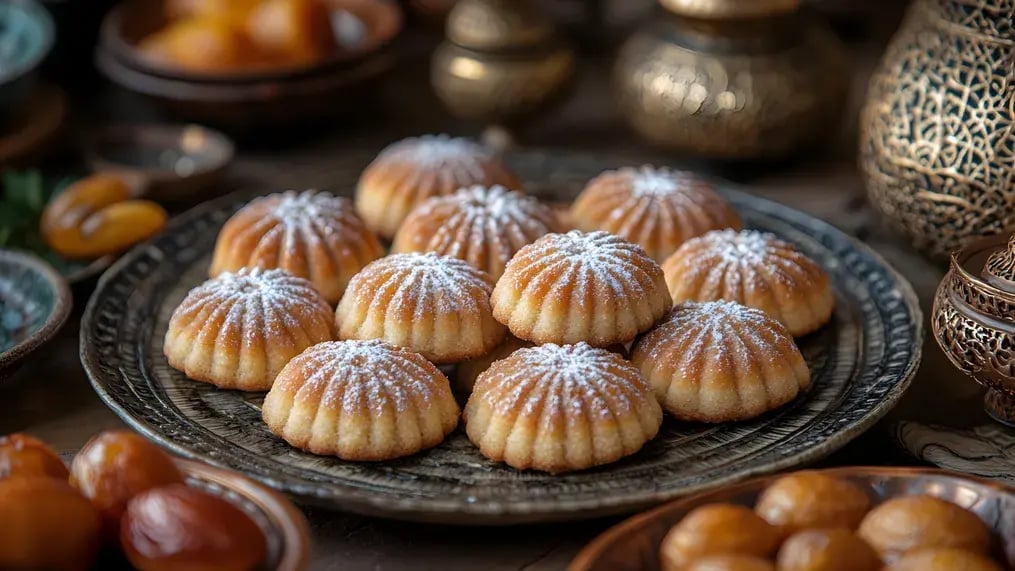
To make the roat biscuit dough, start by combining semolina, flour, sugar, baking soda, and cardamom powder in a bowl. Also, add some ghee, as it helps hold the shape of the dough. Also, stir in some saffron-infused milk and give everything a good mix. Let the dough rest for 40 minutes.
Set The Right Temperature & Timing
Once the dough is ready, preheat the oven to 180°C and prepare a baking tray. Next, take small portions of the dough and divide them into balls. Before baking, flatten them into discs and bake for 25 minutes until the sides and base are golden brown.
Frequently Asked Questions
How long can I store Dum ke Roat? 
When kept in an airtight container, roat biscuit can be stored for about 15 days. For the best results, it is always ideal to store them in a cool, dry place away from moisture.
Can I use sugar instead of jaggery?
Yes, both jaggery and sugar are suitable for this roat biscuit. However, the taste and texture vary. Jaggery offers a deeper, molasses-like flavor and trace nutrients, while sugar is a refined sweetener.
Why is my Roat hard?
Dum ke Roat often becomes hard due to overbaking. It makes the cookies brittle and overly hard. Lack of moisture in the dough is another reason behind it.
Like This Article?
More Like This


Popular Articles


Trending Web Stories


Curated Recipes