








With a 900-year legacy, Puran Poli is a timeless sweet flatbread. From ancient texts to festivals like Holi and Ugadi, it remains a vital festive staple.
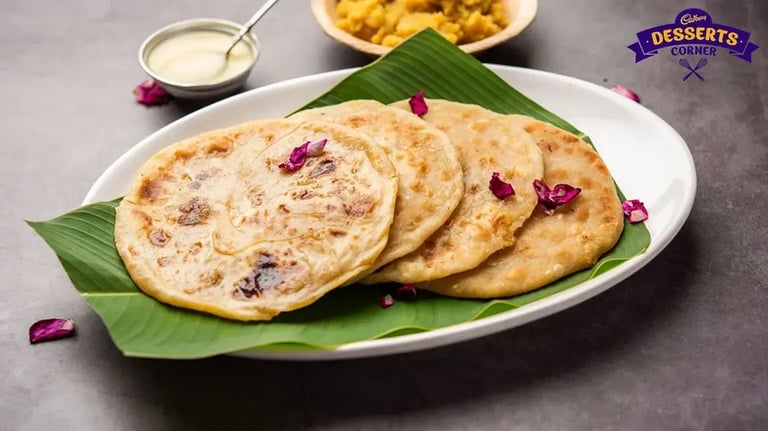
A hot tawa produces aromas of nutmeg and cardamom that build on each other; then the warmth of ghee on the flat dough produces an additional aroma. The golden-coloured dough mingles with the flavors within it of soft cooking chana dal and jaggery together, and as those two form a complete mixture, the aromas produced will signal something deeply ingrained in every Indian that the Puran Poli is now ready.
Puran poli, a sweet bread that is often associated with Maharashtrian cuisine, is not only confined to one state but can be found all over Western and Southern India, where many regions have made changes to the dish according to local traditions. Each state, including Maharashtra, Gujarat, Karnataka, Andhra Pradesh, and Tamil Nadu, has its way of cooking this traditional dish; however, they are all made using the same concept of filling made from lentils and jaggery, stuffed into thin dough, and cooked on a hot griddle until fragrant and golden brown.
For centuries, puran poli has traveled through temple kitchens, across family celebrations, and through. Puran poli has settled along the way, quietly imprinting itself into the culinary memories of many regions while maintaining its distinct identity.
What is Puran Poli?
This dish begins with the word "puran," which means sweet filling in the bread. The puran is made from chana dal (split Bengal gram) that is cooked together with jaggery to create a thick paste. Besides chana dal and jaggery, there are also spices like cardamom or nutmeg added to give it a little extra taste. The second layer of puran poli is called "poli," which refers to a flatbread made either from simple wheat flour or sometimes even refined flour.
Puran poli is made by stuffing some puran into a ball of dough, rolling it out into a flatbread, and then cooking it on a hot griddle with ghee. The result is soft, sweet, and fragrant bread.
In traditional Indian food categories, puran poli would be classified as a "pakvann," which means that it is a dish eaten on occasion and not every day. Due to the use of lentils, jaggery, and ghee as one of the major ingredients, puran poli is viewed as an energy-dense dish that is appropriate for festive cooking.
Even today, puran poli is popular in various parts of India and is served at family events as well as at religious gatherings and festivals. The fact that it has remained popular for many years speaks to the simplicity of the ingredients and the innovative ways the recipe can be modified.
Ancient Trace: Puran Poli Origin to the 12th Century
The history of puran poli can be traced back to India’s medieval cooking traditions, and there is evidence of versions of the dish existing for hundreds of years now.
The earliest reference that one could find in writing was referenced in the Manasollasa, dated to the reign of the Western Chalukya king Someshvara III, who ruled from 1076 to 1130 AD. This Sanskrit manuscript contains a considerable amount of information on everything from how to rule your kingdom to performing culinary arts. There are recipes that were very similar to many common dishes you have today, as well as at least one recipe that resembles puran poli somewhat.
This shows that there were already stuffed sweet flatbreads being eaten in the Deccan region by the time the Manasollasa was written.
References in the Manasollasa and Bhavaprakash
The earliest references to this dish can be found in the Manasollasa, which lists sweets with a sweet filling comprised of lentils & sugar, as part of a cooking preparation. Scholars who study this text often view the descriptions as being examples of early puran poli.
Later texts also continue this trend. The Ayurvedic text Bhavaprakash and numerous later texts, such as Bhaishajya Ratnavali, provide descriptions for different forms of sweets prepared using lentils & jaggery, documenting a continual culinary process found within the preparation of puran stuffing ingredients.
The usage of bakshyam, from the 14th-century Telugu encyclopedic text Manucharitra, describes a sweet preparation known as bakshyam, which has been the cause for many historians to believe that sweet stuffed breads have existed throughout Deccan India for 900 years.
Many historians have also tied the use of these foods with the Maratha cultural period, which valued foods high in carbohydrates and protein for energy levels. The combination of lentils and jaggery created a dense nutritional base for the preparation of puran poli, as both a main course for celebrations and for those whose lifestyle required them to work hard.
Cultural Significance of the Puran Poli
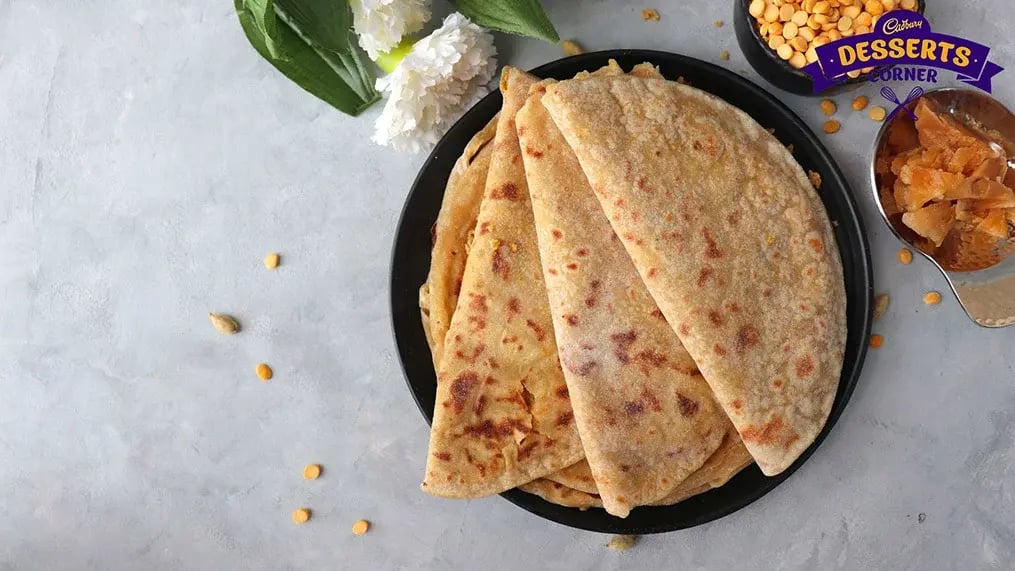
The history of puran poli goes back centuries, and it has come to be associated with many different kinds of festivals and community-based celebrations.
In many homes, the process of preparing this dish is a multistep process. First, lentils are boiled, mashed, and mixed with jaggery. Then, the dough used for the bread must be kneaded and left to rest. Finally, each piece of dough is individually rolled out and cooked on a hot tawa. In many cases, this process becomes a community-based activity.
In Maharashtrian homes, the preparation of puran poli traditionally falls to the older generation of the family, while the younger generation helps them shape and roll the dough. This gives the younger generations a chance to see the techniques used for making puran poli, learn about the proportions needed, and assist with cooking the puran poli.
Food historians have noted that many of these types of festive foods provide a way to preserve food preparation knowledge due to the fact that they are prepared repeatedly in a ritualistic manner. The preparation of puran poli fits this pattern.
Puran Poli is Famous in Which State? A Festive Staple for Holi and Ganesh Chaturthi
Puran poli is a popular dish at most of the large Hindu festivals. It is made throughout Maharashtra at some point in time during the year for festivals such as Holi, Gudi Padwa, and Ganesh Chaturthi.
For the festival of Holi, many families make large quantities of puran poli to share with their extended family and friends. Additionally, puran poli is often served as naivedya, or an offering to the gods, before being shared with family members.
Puran poli is regularly included in the offerings made to Lord Ganesh during Ganesh Chaturthi celebrations, along with many other sweets and savory dishes.
The preparation and sharing of this dish create its continued existence as part of regional food traditions.
Puran Poli Through Many States and Regional Variations: One Dish, Many Names
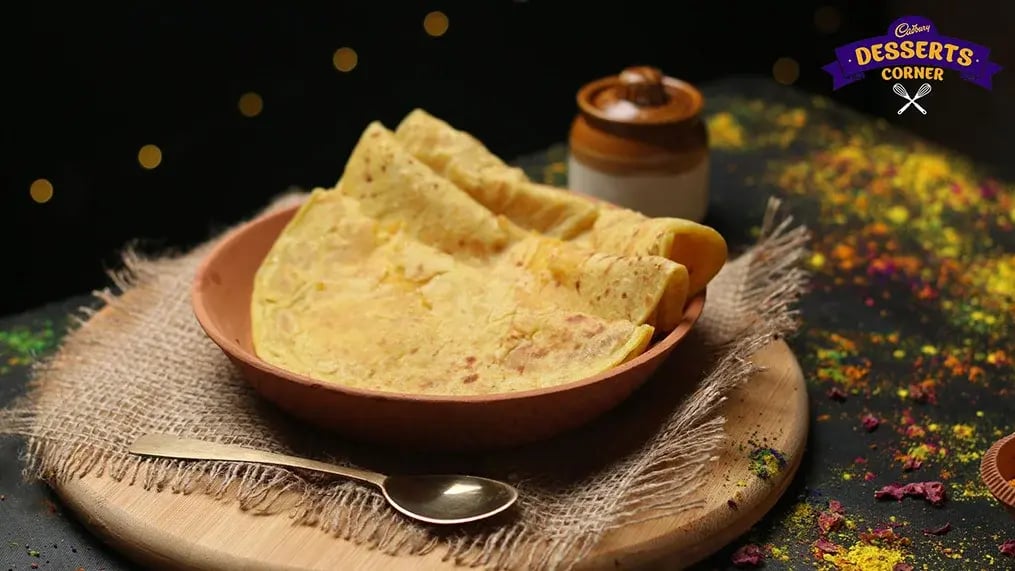
Puran poli has many names and interpretations throughout India. Each region has its own style for making this sweet, stuffed bread; however, they all follow the same basic concept.
Maharashtrian Puran Poli vs. Gujarati Vedmi
The most common example of puran poli today comes from Maharashtra, with chana dal and jaggery as the primary ingredients for the filling and cardamom and nutmeg for flavor. The dough is rolled thin and pan-fried using ghee until golden brown.
In Gujarat, the Vedmi, the equivalent of puran poli, is made using toor dal in place of chana dal as the ingredient used to fill the bread. The result is that vedmi tends to be slightly thicker than puran poli because more ghee is typically used in the dough.
The choice of lentil affects both the texture and the taste of the dish. The use of toor dal adds a creamier and smoother consistency to the filling as compared to a grainier texture achieved when using chana dal.
Holige and Obbattu of the South
The dish, puran poli, is known by various names in the Southern parts of India. In Karnataka, it is called Holige or Obbattu, while by its fellow southerners in Andhra Pradesh and Telangana, it's known as Bakshalu or Bobbattu.
The variations of puran poli found across regions may or may not use maida (white flour) instead of whole wheat to make the dough. There are also some regional variations of the dish, such as filling it with coconut-based ingredients in addition to jaggery.
In Andhra Pradesh, for example, bakshalu is often rolled out super-thin and then folded over prior to being served. On the other hand, holige is usually presented on a banana leaf during festivals in Karnataka.
Each of these regional puran polis has a common ancestry, which connects all of them through the sweet lentil filling along with the soft flatbread.
Traditional Accompaniments: How to Serve Puran Poli
In Maharashtra, the puran poli is served with either ghee, milk, and/or sweet dishes, such as Basundi or Aamras. The ghee, milk, and sweet dishes add flavor to the puran poli and emphasize the sweet filling.
The Perfect Pair: Katachi Amti and Ghee
Katachi Amti is a spicy and sour curry that serves as a traditional accompaniment to sweet puran poli. Katachi amti (the same chana dal used to prepare the sweet puran filling) is made from the strained cooking water of chana dal that is spiced and seasoned with tamarind to provide a strong, tangy, savory flavor. The two dishes complement each other nicely due to the sweetness of the puran filling and the spiciness of the katachi amti.
Ghee is usually poured over the hot puran poli when served with katachi amti because it helps to melt into the bread's surface to enhance the spicy aroma from the spices used in katachi amti preparation.
Some families serve katachi amti with warm milk as another option for accompanying puran poli, resulting in a milder flavor.
Frequently Asked Questions About Puran Poli History
Who invented Puran Poli? 
No one knows for sure when puran poli originated. Evidence suggests that recipes for the dish have been recorded for centuries in the medieval times of the Deccan region. Evidence also suggests that there are many different types of Puran Poli and that they originated in Karnataka and later spread to Maharashtra.
How old is the Puran Poli recipe?
Ancient texts indicate that puran poli can be traced back to at least the 12th century, when the dish was recorded in the Manasollasa, a Sanskrit encyclopedia created during the 1100s.
What is the difference between Puran Poli and Holige?
Both types of flatbreads share a basic design, sweet, one or two-inch thick, and the only real difference is the usage of lentils. For instance, the ingredients in the Maharashtrian version are typically used with chana dal, while those in the southern varieties (holige) can either have a toor dal or sometimes include coconut as one of the ingredients.
Is Puran Poli healthy?
Puran poli provides a plethora of nutrients through the use of lentils (protein), as well as iron through jaggery (the sweetener used in the dish). In contrast, puran poli contains a very high sugar and ghee content, making the dish extremely high in calories; therefore, it should only be enjoyed on occasion as part of an overall balanced diet.
Like This Article?
More Like This



Popular Articles


Trending Web Stories


Curated Recipes


